Real-World Deployments with Bivocom
In our previous article, we explored why manholes — the invisible backbone of modern cities — demand smarter monitoring. But knowing why is only half the story. The real question is how. How do you deploy reliable connectivity beneath three meters of concrete and soil? How do you design devices that survive hydrogen sulfide, extreme temperature swings, and years without maintenance? And how do you turn raw sensor data into actionable intelligence that prevents disasters before they happen? This article moves from theory to practice. Drawing on real-world deployments across drainage networks, gas pipelines, and flood-prone urban areas, we examine how Bivocom‘s IoT manhole solutions are transforming underground infrastructure from invisible liability to intelligent asset.
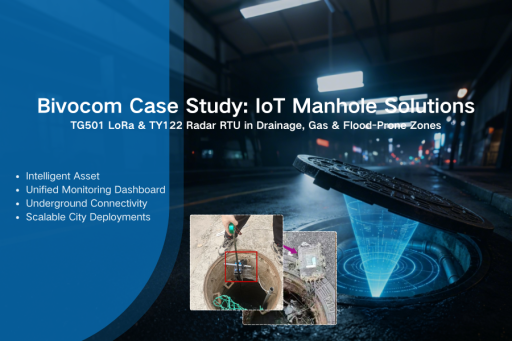
Proven Deployment Models for Diverse Projects
No two underground networks are identical. Site density, signal availability, power access, and monitoring goals all shape the best design. Drawing on real-world deployments, we examine two complementary approaches from Bivocom‘s industrial IoT portfolio: TG501 LoRa RTU and TY122 integrated radar level RTU sensor.
TG501 Outdoor LoRa RTU
When to use? Dense urban neighborhoods, industrial parks, and historic city centers with dozens or hundreds of manholes clustered together. LoRa-based networking delivers the lowest total cost of ownership and the most reliable underground penetration.
The challenge? Manhole monitoring is rarely single-dimensional. A single access point may need to track cover tilt, water level, gas concentration, temperature, and flow rate simultaneously. Deploying separate devices for each parameter quickly becomes impractical and expensive.
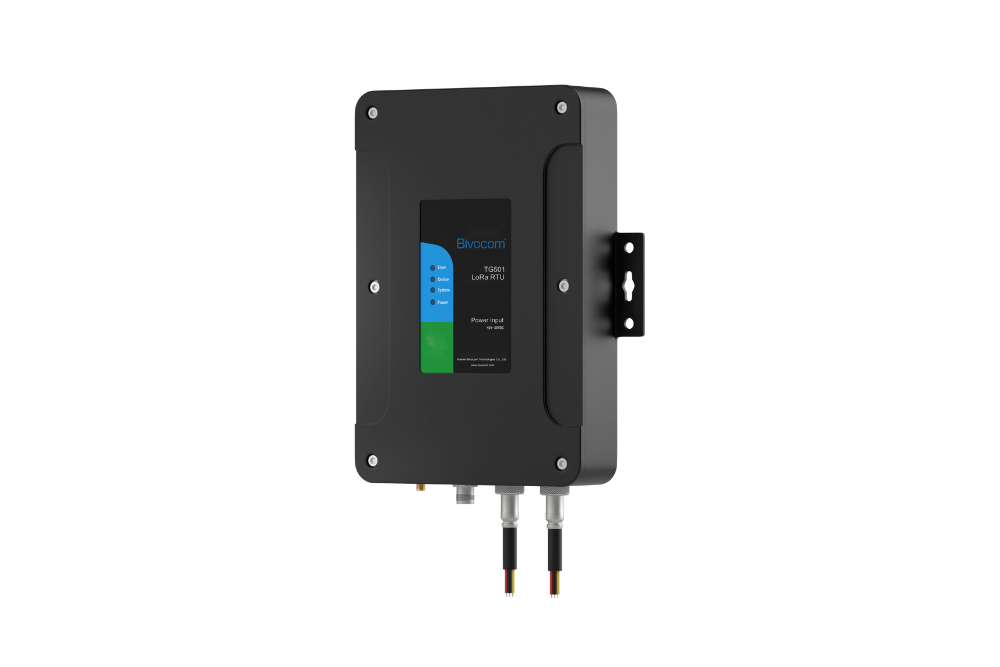
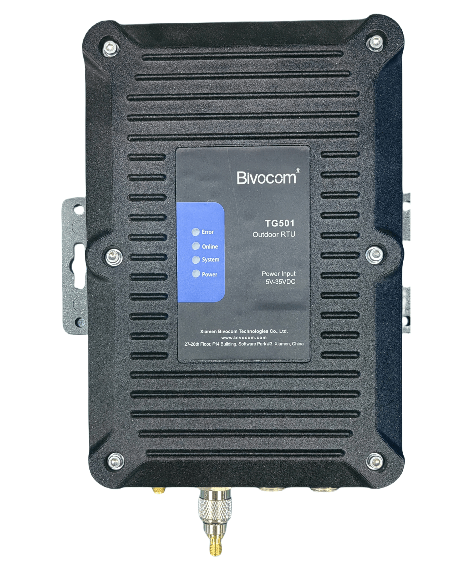
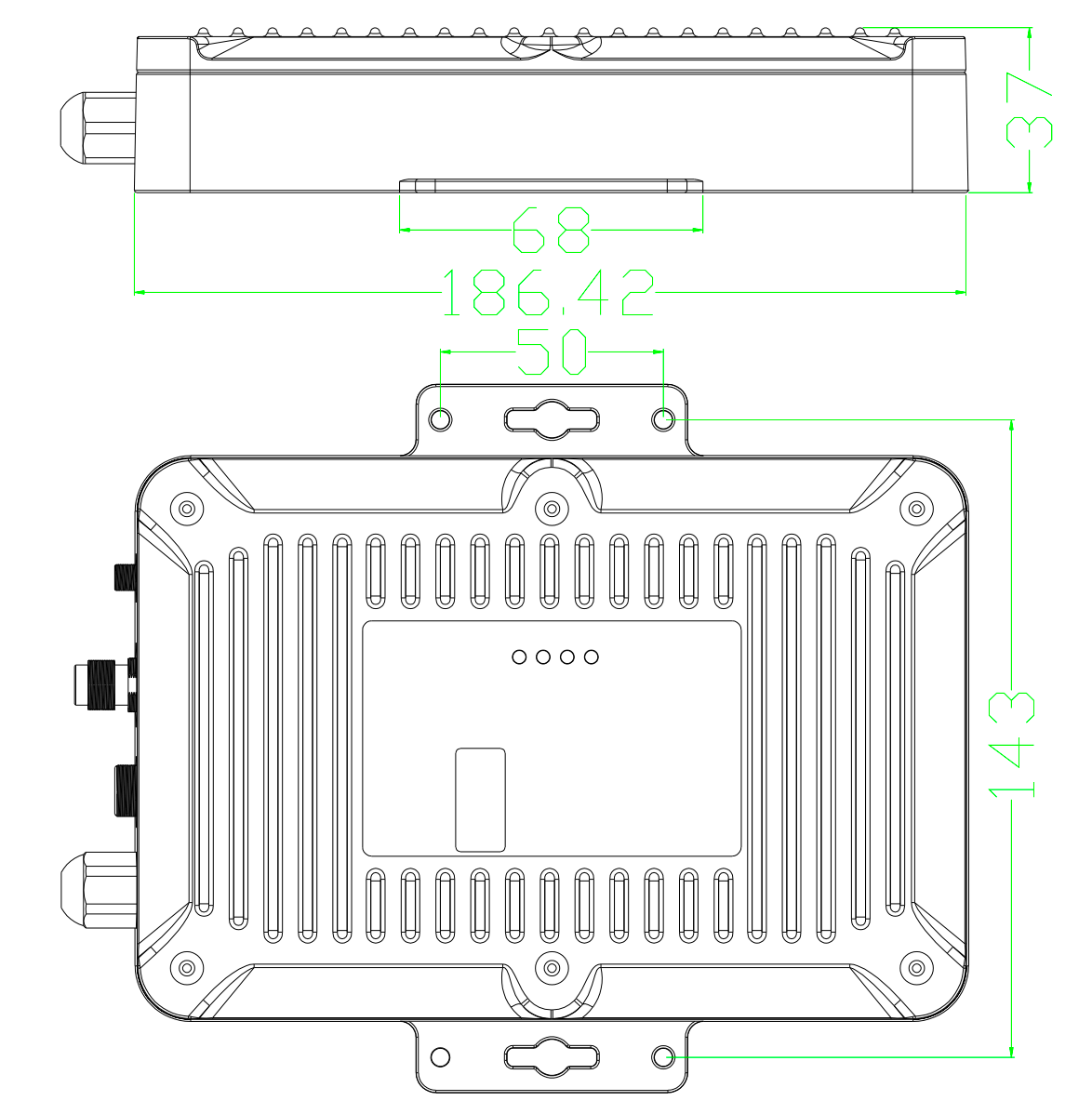
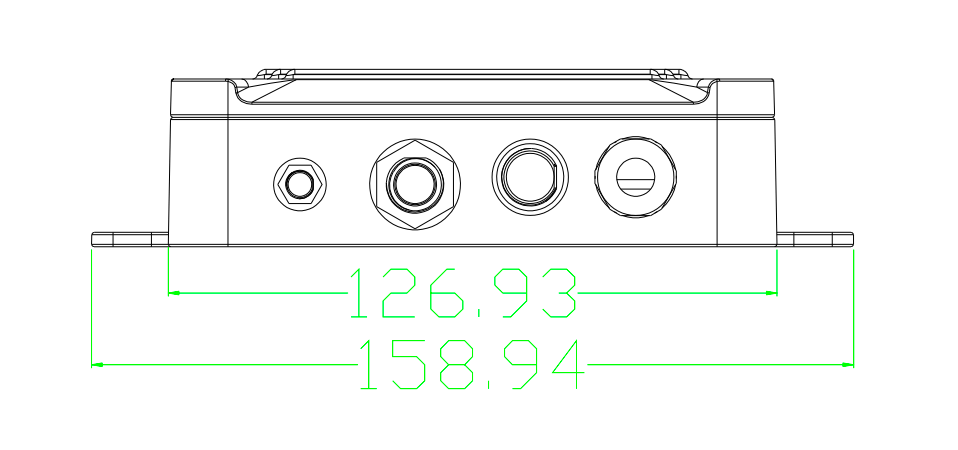
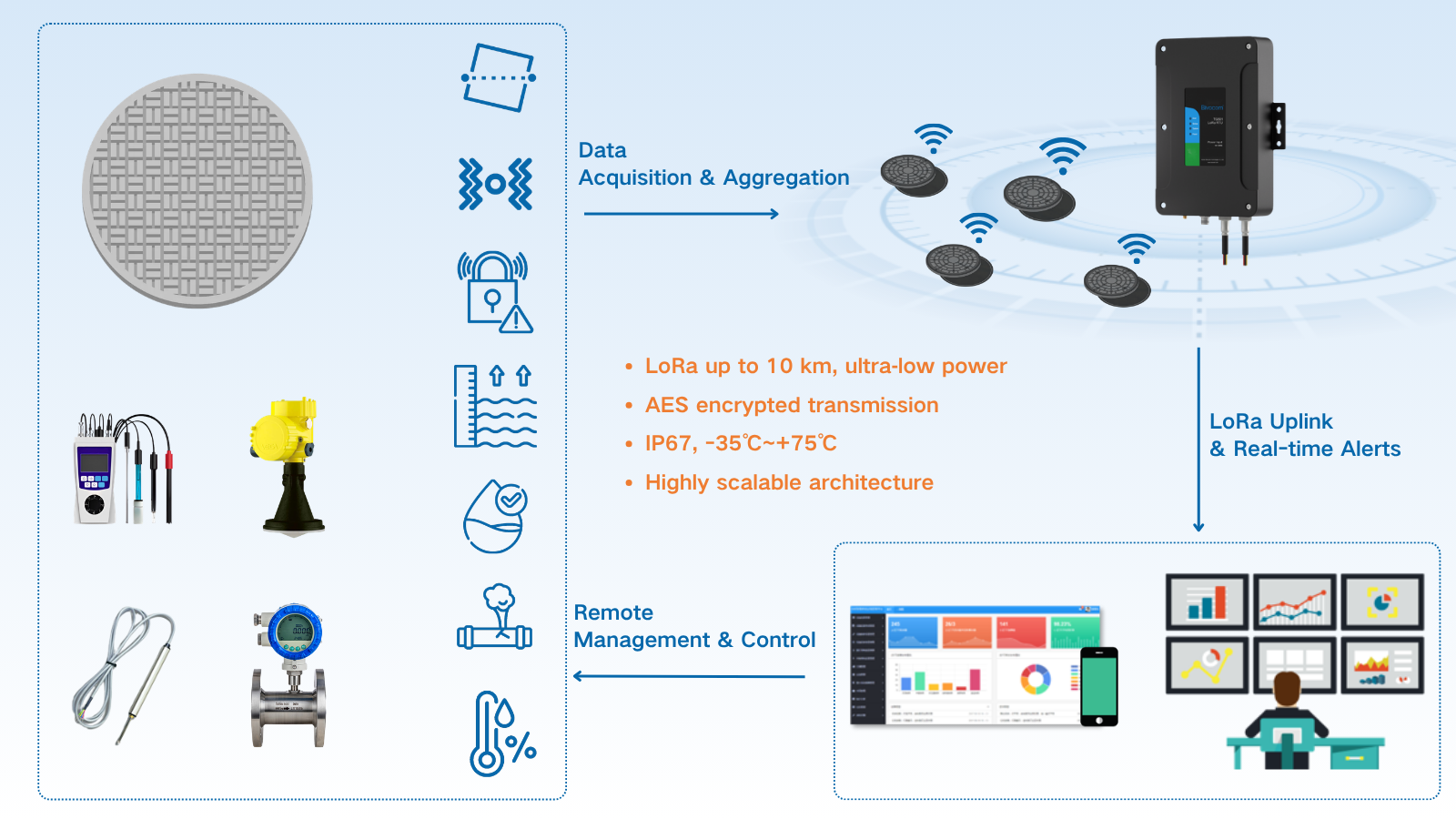
The solution? The TG501 Outdoor LoRa RTU addresses this through an integrated design.Compact, rugged RTU units sit inside each manhole as local data hubs. They combine long-range LoRa communication with on-site data collection and control. The device features 1x RS232, 1x RS485, 4x DI, 2x Relay, 1x PI, and 3x analog inputs. Each unit connects to a mix of sensors — water level, toxic gas concentration, cover tilt, temperature — via digital inputs, analog channels, and serial ports.
With low power consumption and a range of up to 10 kilometers in open air. AES encryption keeps over-the-air data secure, even in challenging signal conditions. Its IP67 die-cast aluminum housing resists dust, water immersion, and corrosion. A wide operating temperature range of -35°C to +75°C suits harsh outdoor and underground environments.
Deployment: Smart Manhole Cover Monitoring
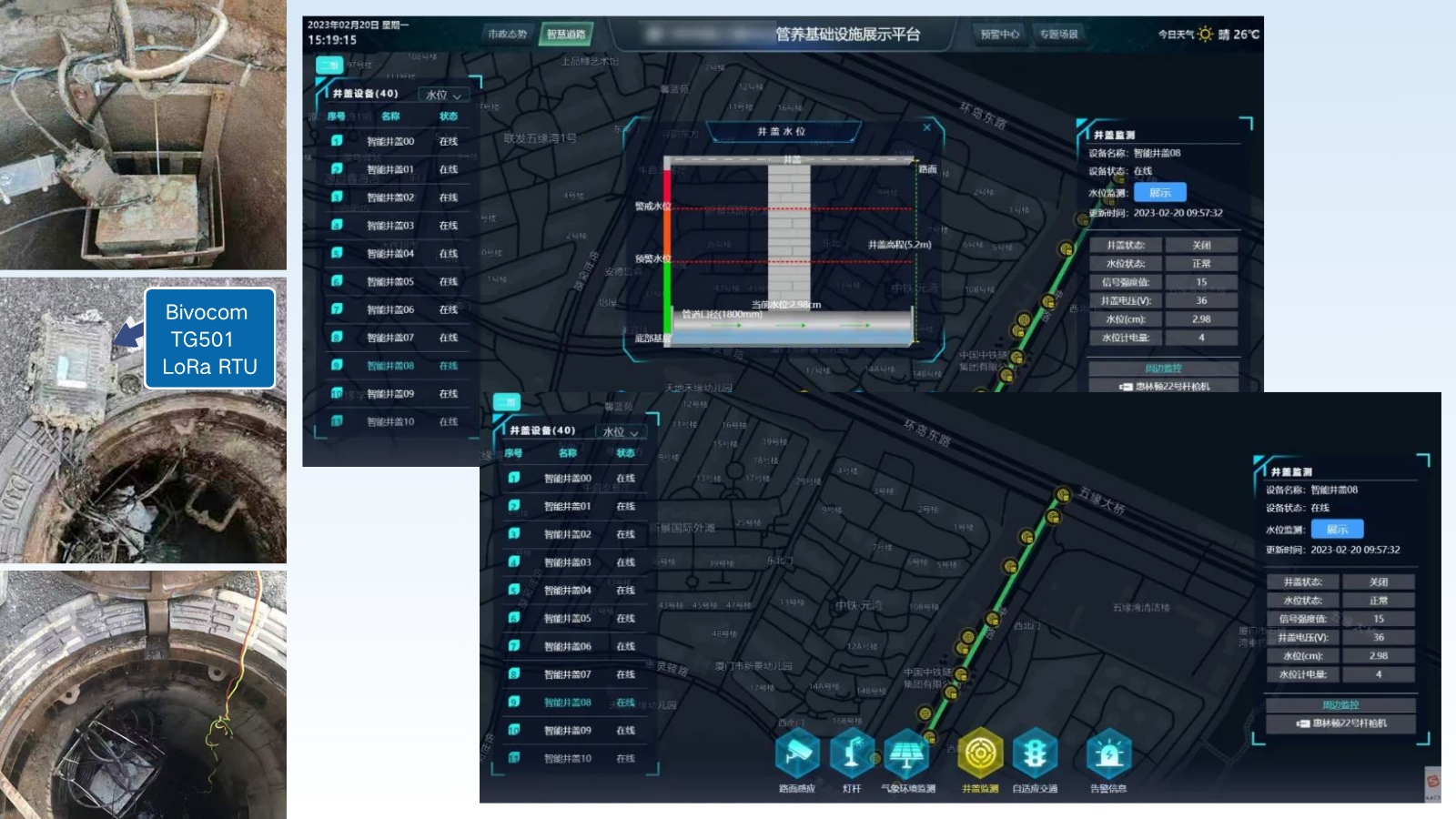
In city-wide smart manhole programs, the TG501 serves as the core data acquisition node for high-priority urban zones. It pairs with tilt and vibration sensors, level meters, and optional water quality detectors. Data travels over a municipal LoRa network to a unified management platform. The setup delivers real-time alerts for cover displacement or tampering with precise location data, significantly reduces routine manual inspection patrols, and helps prevent fall incidents from unsecured manholes. Its scalable architecture supports thousands of nodes, making it suitable for full-city rollouts.
Deployment: Outfall Pipe Network & Remote Water Level Monitoring
In municipal outfall pipe networks and water tower level monitoring, the TG501 monitors liquid level, flow, and rainfall data at critical nodes. Deployed alongside flow meters, level sensors, and rain gauges, it transmits data over LoRa to gateway nodes, which relay it to management centers. The setup enables early detection of overflow and blockage risks, supports 24/7 unattended operation without cellular fees or complex wiring, and allows preventive action before problems escalate. Its low-power design and IP67-rated enclosure ensure reliable performance in harsh outdoor environments.
Deployment: Industrial & Gas Utility Monitoring
In industrial chemical parks and gas utility networks, the TG501 monitors underground wastewater manholes and pipeline access points for liquid level, hydrogen sulfide concentration, pressure, temperature, and unauthorized cover access. Wired to gas detectors, level sensors, and pressure transmitters via RS485 and digital inputs, it transmits encrypted data over a private LoRa network to site EHS platforms or existing SCADA systems. The setup enables faster emergency response, reduces the need for manual entry into high-risk manholes, and helps prevent safety incidents linked to underground overflow or gas buildup.
TY122 integrated radar level RTU sensor
When to use? Scattered high-risk manholes, remote suburban locations, or projects requiring fast rollout with no extra gateway infrastructure. An all-in-one cellular monitoring terminal delivers the fastest time to value.
The challenge? Traditional approaches — float switches, hydrostatic pressure sensors — fail over time in sewer environments. Sediment buildup, biological growth, corrosion, and mechanical jamming degrade performance and require frequent maintenance. In critical flood-prone locations, sensor failure can have serious consequences.
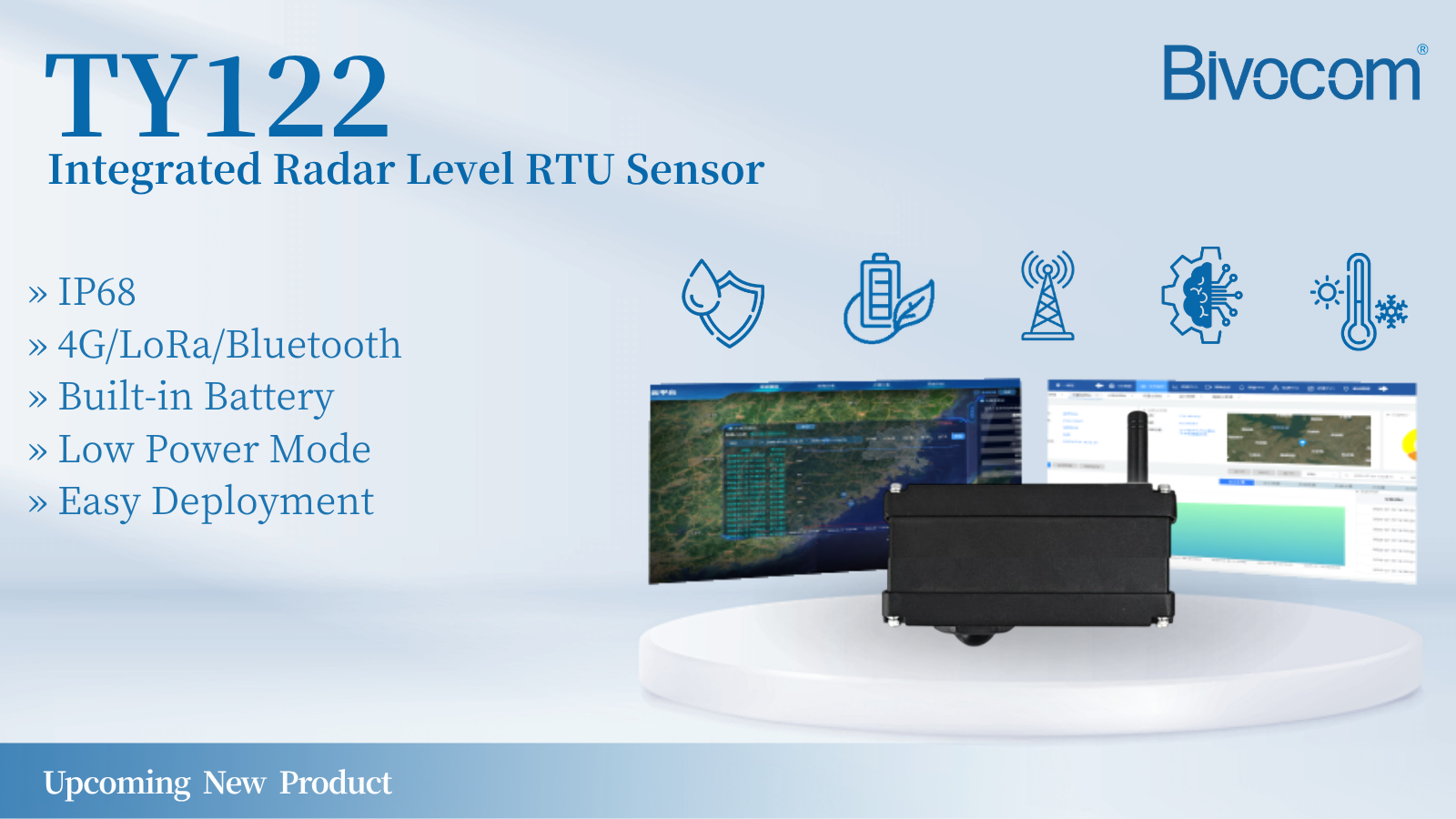
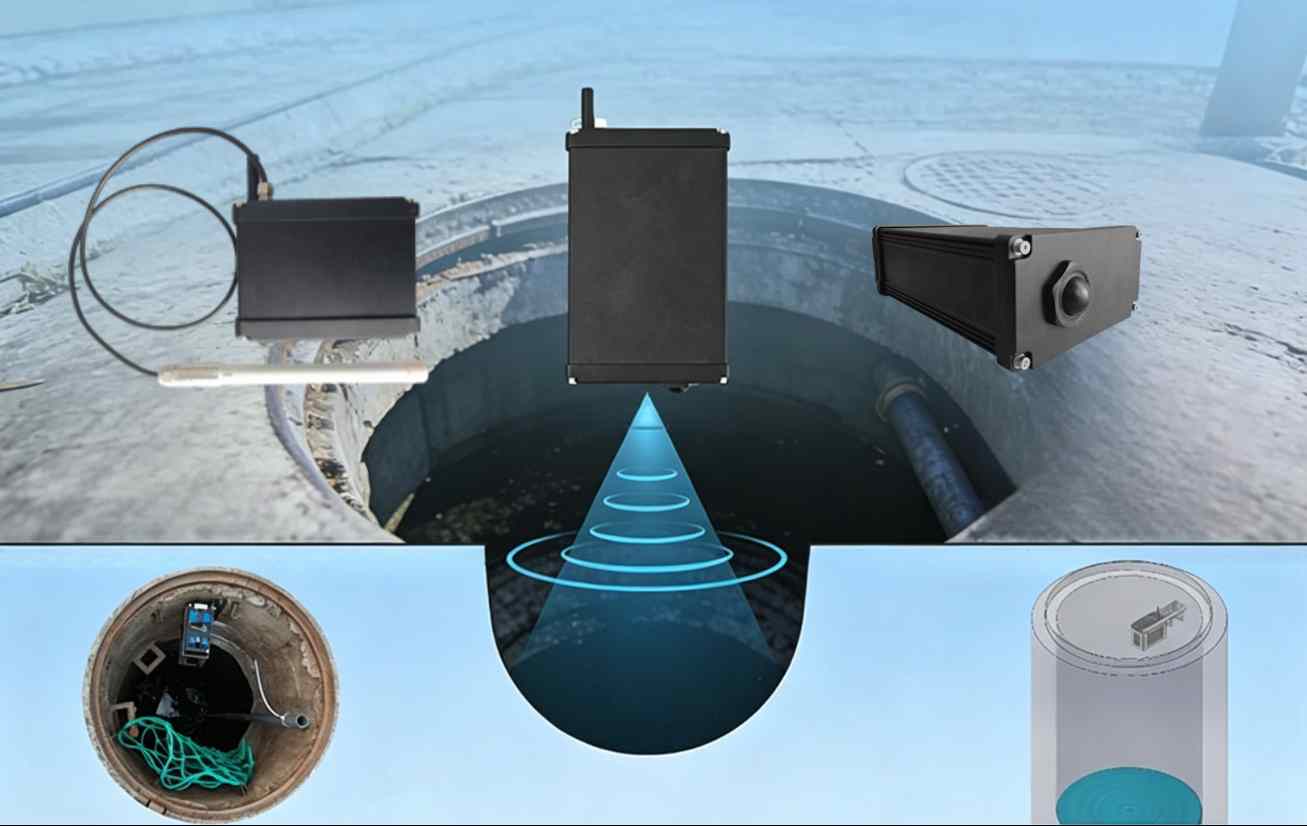
The solution? The TY122-B6 integrated radar level meter takes a fundamentally different approach. It combines a radar level sensor, wireless communication RTU, and self-powered battery system into a single enclosure. Installation requires no external wiring, no grid power, and no specialized tools. Crews mount the device to the manhole wall, configure settings via Bluetooth on a mobile device, and close the cover. The entire process takes minutes per site.
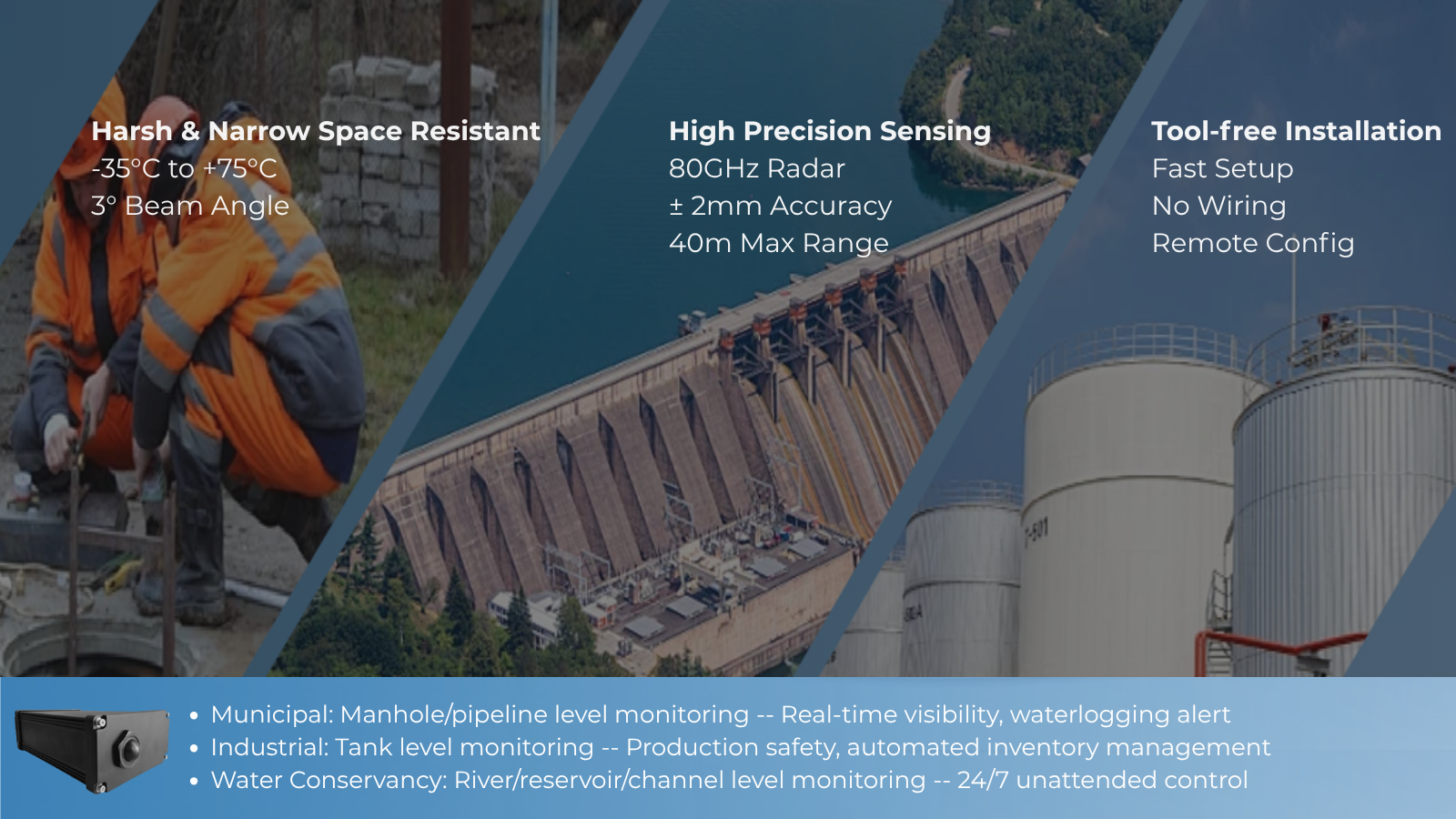
The TY122 uses 80GHz FMCW (Frequency Modulated Continuous Wave) radar technology with ±2mm measurement accuracy. Its narrow 3° beam angle effectively suppresses interference from manhole walls, focusing on the true liquid surface. Because the measurement is non-contact, the sensor avoids the most common failure points of traditional submersible or float sensors: clogging from sediment, corrosion from sewage, and measurement drift over time. IP68 protection and R10 corrosion resistance ensure reliable operation in the most demanding environments, while system-level power optimization keeps the device running for 5–10 years on a single battery—drastically cutting routine site visits and worker exposure to hazardous underground conditions.
Deployment: Critical Drainage Manhole Monitoring
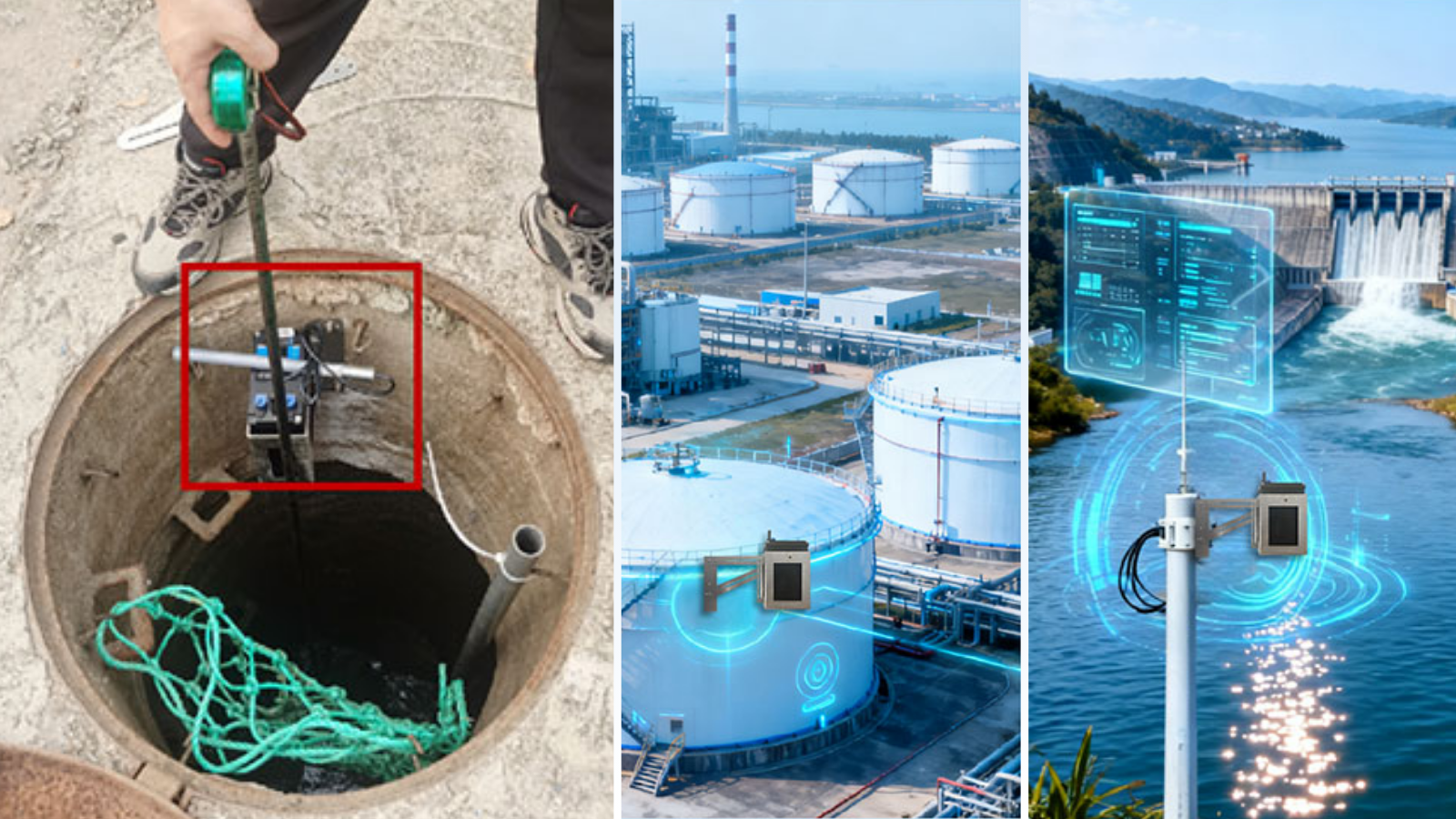
In rainwater and sewage pipeline networks, the TY122 is deployed in critical manholes alongside telemetry terminals to monitor water level changes in real time. Deployed via simple bracket mounting and Bluetooth configuration, it transmits data over 4G CAT.1 directly to management platforms without gateways or complex wiring. The setup delivers immediate alerts when water levels rise abnormally—indicating potential blockages or overflow conditions. It enables rapid identification and clearance of blockages, and prevents flooding and sewage overflow. Its non-contact 80GHz radar with ±2mm accuracy and 3° narrow beam angle effectively suppresses interference from manhole walls, ensuring reliable operation even in sediment-laden or corrosive environments where traditional contact sensors fail.
Expanded Applications
Beyond drainage manholes, the TY122 serves water conservancy and hydrology monitoring at rivers and reservoirs, safe measurement of corrosive or hazardous media in chemical storage tanks, and wastewater treatment facilities. Its maximum range of 40 meters covers applications from shallow wells to deep tanks, while support for multiple communication options—4G/5G, and LoRa—plus standard protocols like MQTT and custom private protocols lets it integrate flexibly with existing monitoring platforms.
About Bivocom
Beyond individual manholes, this same rugged IoT architecture scales seamlessly to broader underground infrastructure. Utility tunnels, stormwater culverts, highway underpass drainage systems, and industrial storage tanks all face the same core challenges: limited access, harsh operating conditions, and constrained power and connectivity. Backed by over a decade of industrial IoT expertise and deployments across 90+ countries, Bivocom delivers reliable, consistent performance across all these use cases, with unified platform visibility that gives operators a single view of their entire underground asset portfolio.
- End-to-end technical support: Guidance from initial product selection and system integration through to on-site troubleshooting and scaled rollout.
- Customizable full-stack solutions: Complete IoT chain coverage from edge hardware to cloud platforms, tailored to local underground conditions and specific project requirements.
-on-Bivocom-TG465-IoT-Edge-AI-Gateway-with-Ubuntu-768x512.png "Install Ollama & Llama (LLM, large language model)) on Bivocom TG465 IoT Edge AI Gateway with Ubuntu")
Comment