Eliminates Hidden Water Loss & NRW
Aging urban pipe networks continuously lose water through invisible cracks and micro-leaks. For municipal utilities, this hidden wastage translates directly into substantial financial loss, generating billions of dollars in annual Non-Revenue Water (NRW) worldwide. To mitigate this challenge, water operators are rapidly adopting smart DMA IoT solutions. These modern systems upgrade traditional hydraulic zoning frameworks with industrial IoT connectivity, transforming passive pipe assets into intelligent, data-driven infrastructure.
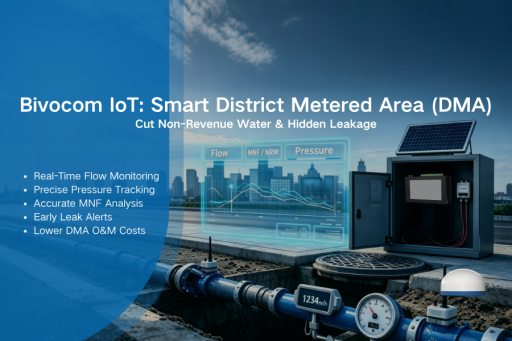
What Is DMA?
DMA (District Metered Area) is the global standard for leak control and refined water management. It divides complex city pipelines into independent, closed monitoring zones. Each zone retains one fixed inflow point for unified metering. The core formula is universal and precise: Total Inflow − User Consumption = Actual Network Water Loss.
For decades, DMA has formed the backbone of NRW reduction strategies. Without zone segmentation, leak detection becomes guesswork. DMA makes invisible water loss measurable and traceable, empowering field crews to focus on high-risk districts and accelerate leak remediation.
The Current State of DMA and Emerging Technologies
Traditional DMA relies on monthly on-site meter readings and offline post-event analysis. While functional, this manual workflow cannot satisfy the operational requirements of modern smart cities. Today, a suite of emerging technologies enables real-time, predictive water network oversight.
- IoT: Delivers 24/7 automated data collection and wireless transmission, eliminating delays and human error associated with manual meter rounds.
- Edge Computing: Supports local data caching and preprocessing to preserve data integrity under unstable outdoor cellular connectivity.
- Cloud Big Data: Enables long-term data archiving, trend visualization and professional Minimum Night Flow (MNF) calculation.
- AI Analytics: Improves detection of hidden leakage, pipe burst alerts and overall pipe network health assessment to support predictive maintenance.
Among all available upgrade paths, smart DMA IoT stands out as the most mature, cost-effective and widely deployable solution. It serves as the core data foundation underpinning all advanced intelligent water network algorithms.
Why Legacy DMA Needs an IoT Upgrade?
Despite its standardized zoning logic, traditional offline DMA faces insurmountable bottlenecks in modern scenarios.
- Severe data latency and data gaps: Monthly manual readings allow underground micro-leaks to remain undetected for weeks or months.
- No MNF analysis capability: Continuous minute-level time-series data is required for Minimum Night Flow analysis — the industry gold standard for uncovering hidden leakage, which legacy DMA cannot provide.
- Absence of real-time early warning: Pipe bursts and pressure anomalies are only identified via customer complaints or physical patrols, resulting in severe water waste and road infrastructure damage.
- Escalating operational costs: Frequent site visits for meter collection increase labour risks and long-term OPEX, particularly for remote DMA nodes.
- No remote maintenance support: All equipment faults and parameter adjustments demand on-site troubleshooting, leading to inefficient operations and slow scalability.
How IoT Transforms DMA
IoT resolves these limitations by transforming passive physical pipelines into an active, interconnected digital network for real-time, full-lifecycle monitoring. Its core architecture follows a streamlined five-tier workflow:
- Sensing Layer: Field sensors capture raw flow and pressure signals to generate physical hydraulic data for leakage diagnosis.
- Collection Layer: Flow data loggers aggregate sensor readings and convert measurements into standardised industrial formats.
- Edge Processing Layer: Local edge terminals filter and preprocess data to optimise bandwidth utilisation.
- Transmission Layer: Industrial RTUs and gateways securely transmit processed data wirelessly amid fluctuating outdoor network conditions.
- Cloud Application Layer: Cloud platforms visualise data curves, run MNF algorithms, analyse leakage trends and trigger automated anomaly alerts.
Bivocom Role in IoT Smart DMA
As a global specialist in industrial edge IoT terminals, Bivocom focuses on unattended, outdoor applications. Our RTUs, routers and gateways help operators overcome unstable connectivity, extreme temperatures, and excessive O&M costs. For geographically distributed DMA projects, we recommend the following industrial-grade products.
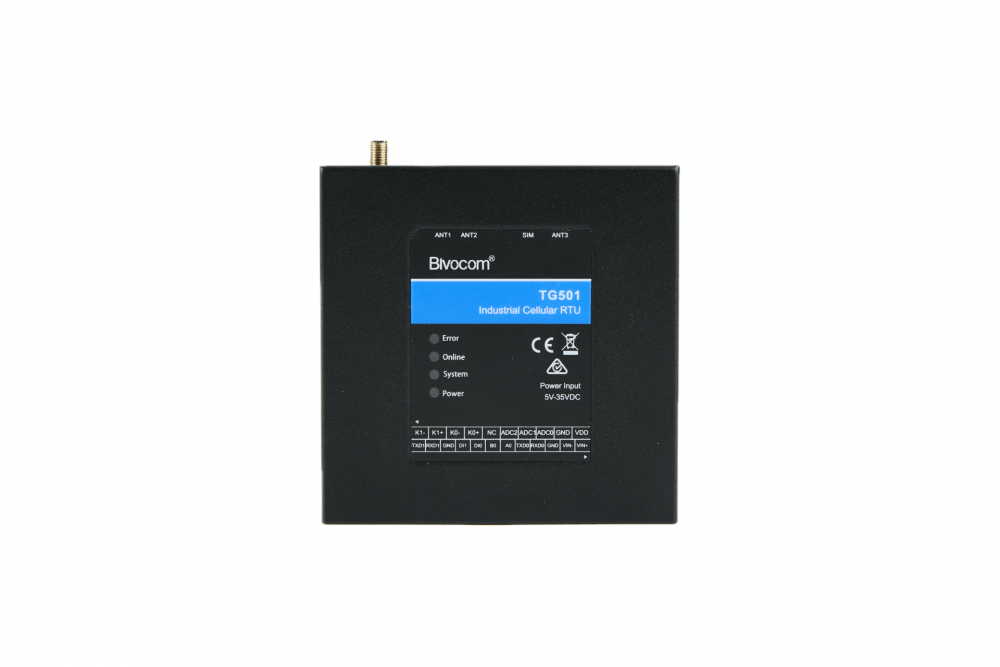
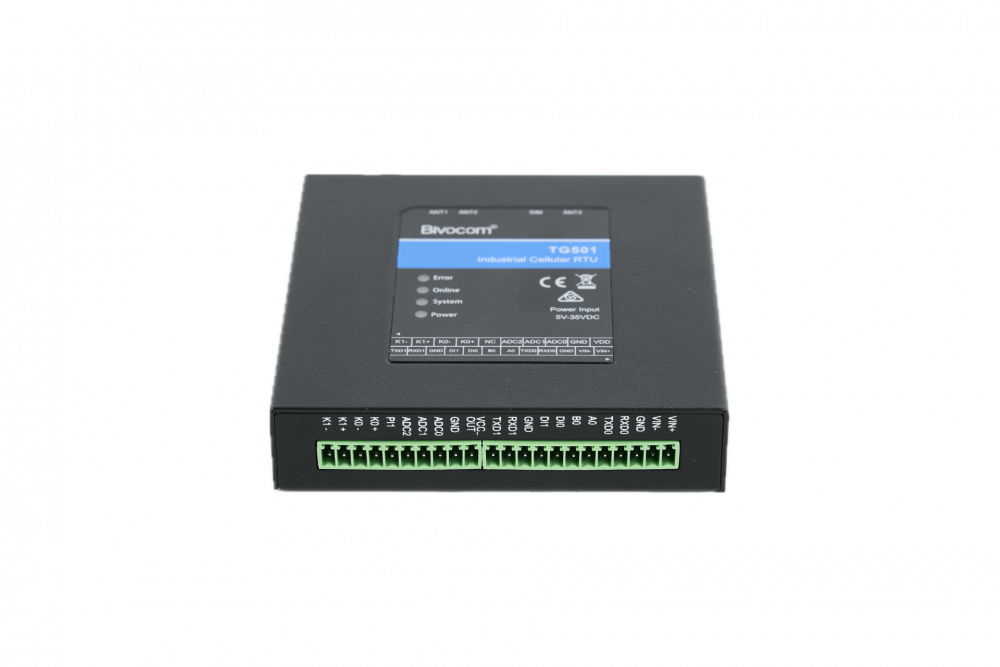
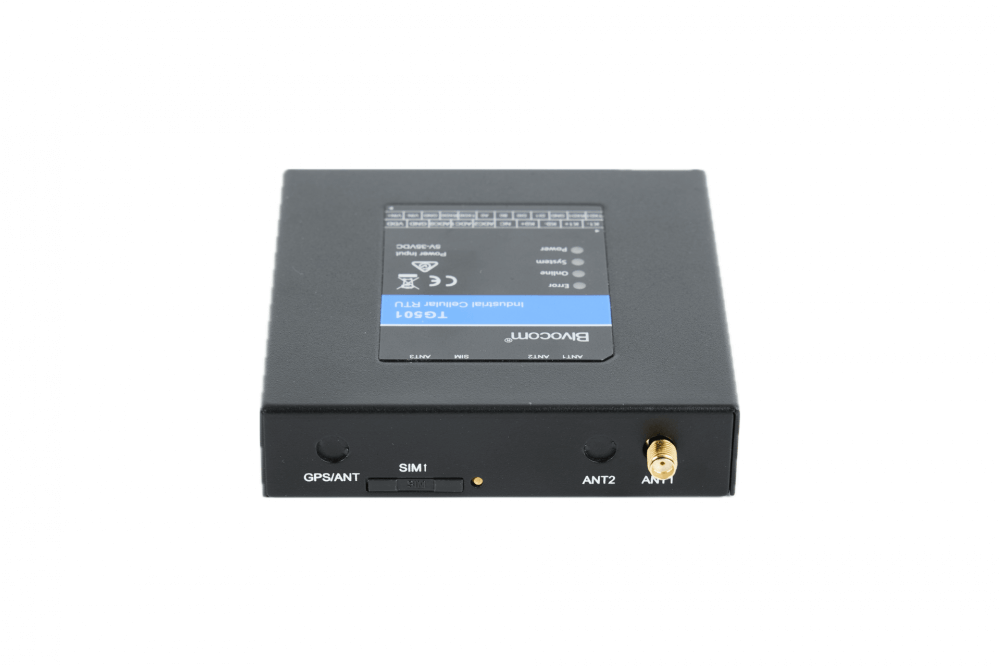
TG501 Industrial Mini RTU
Engineered for standard single-point DMA flow and pressure monitoring stations, the compact TG501 is ideal for large-scale, cost-effective rollouts.
- Local offline storage capability: 16 MB flash enables offline data caching and breakpoint-resume transmission, safeguarding continuous time-series data to deliver reliable MNF analysis within DMA zones.
- Multi-protocol and multi-I/O compatibility: Integrated RS485, 16-bit ADC and relay interfaces support Modbus / MQTT protocols, seamlessly connecting flowmeters and pressure transmitters to fulfil core DMA dual-parameter monitoring requirements.
- Global multi-network support: Compatible with 4G/3G/2G, LTE CAT M1 and NB-IoT, offering flexible network selection to match signal coverage at scattered roadside DMA stations.
- Remote alarm and debugging tools: Built-in SMS alarms send instant notifications for pipe network anomalies; AT command support simplifies remote maintenance for unmanned monitoring sites.
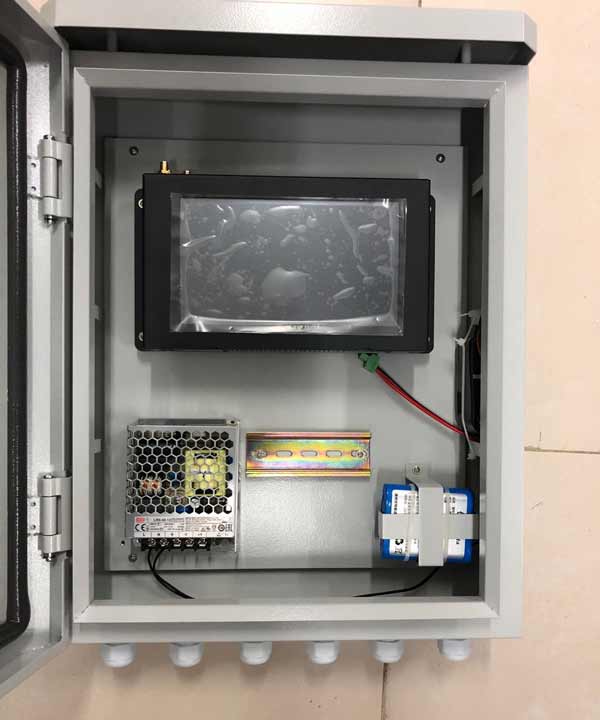
- Harsh-environment industrial design: 5–35 VDC ultra-wide input voltage and stable operation between –35 °C and +75 °C, perfectly matching solar-powered off-grid outdoor DMA cabinet deployments.
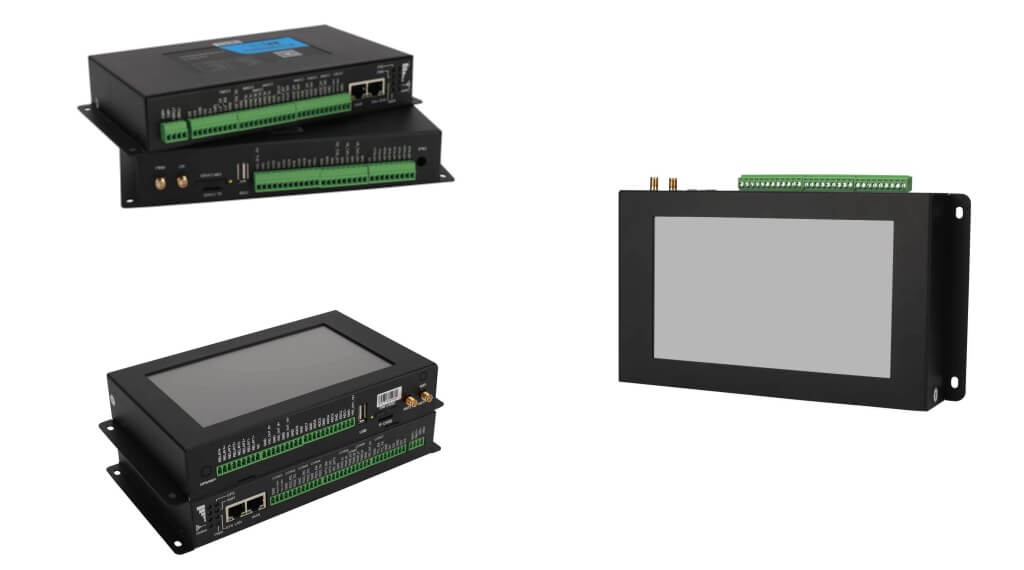
TG462 High-Performance Edge Gateway
For large-scale, complex DMA hubs requiring advanced local logic, data visualization, and richer connectivity, the TG462 series delivers robust edge computing capabilities.
- High-performance edge computing and scalable storage: ARM CPU and expandable local storage support on-site data filtering and logic processing, reducing cloud computing loads for high-volume DMA flow and pressure datasets.
- Rich expandable interfaces: Abundant Ethernet, serial, ADC and relay ports support multi-device connectivity, reserving capacity for future upgrades including water quality sensors and remote valve control.
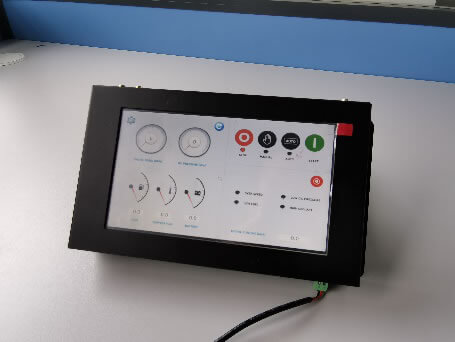
- On-site touch HMI: Integrated 7-inch screen enables real-time data viewing and local parameter tuning without laptops, boosting efficiency during on-site troubleshooting.
- Secure enterprise-grade communication: Optional LTE CAT4 / CAT6 and VPN encryption deliver stable, uninterrupted data transmission for critical DMA boundary monitoring nodes.
About Bivocom
Traditional manual DMA can no longer support the refined and intelligent development needs of modern urban water networks. Driven by Bivocom IoT edge technology, smart DMA IoT has become the standard upgrade path for global water leakage management. It solves the core pain points of delayed data, missing analysis capabilities and high operation costs, helping water utilities achieve precise leakage control and sustainable NRW reduction.
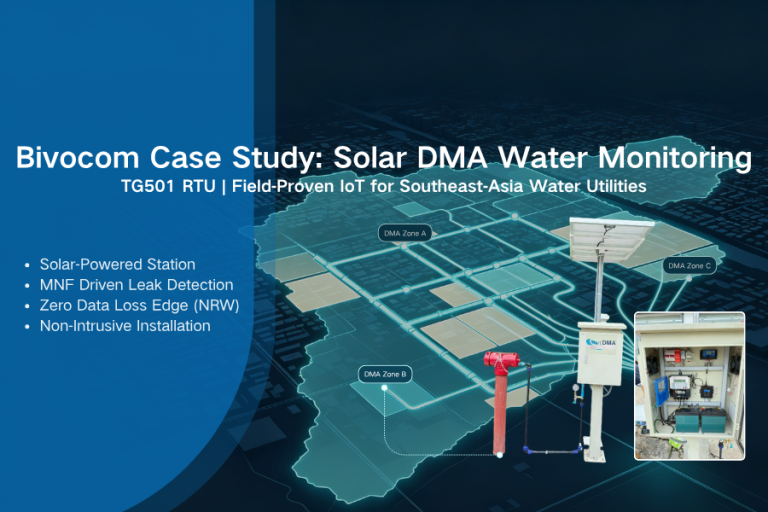
For any immediate inquiries regarding our solutions, please feel free to contact us at [email protected]. In our upcoming blog, we will shift from the drawing board to the field. We will dissect a live Smart DMA IoT project installed at a solar-powered, off-grid roadside monitoring station in Southeast Asia. Stay tuned for the deep-dive case study.
-on-Bivocom-TG465-IoT-Edge-AI-Gateway-with-Ubuntu-768x512.png "Install Ollama & Llama (LLM, large language model)) on Bivocom TG465 IoT Edge AI Gateway with Ubuntu")

Comment