Zero Data Loss
In our previous article, we explored why offshore oil and gas operations need IoT monitoring — and the six use cases that deliver the greatest value. Today, we break down a real-world offshore methane monitoring deployment built on open-path laser technology. Bivocom TG452 IoT Gateway acts as the core connectivity hub, unifying wired and wireless detection devices, transmitting data to onshore systems over 4G, and integrating seamlessly with the platform’s Yokogawa DCS. Housed in an explosion-proof control cabinet on site, the solution delivers 24/7 wide-area coverage, audit-ready data trails, and fail-safe local alarm logic.
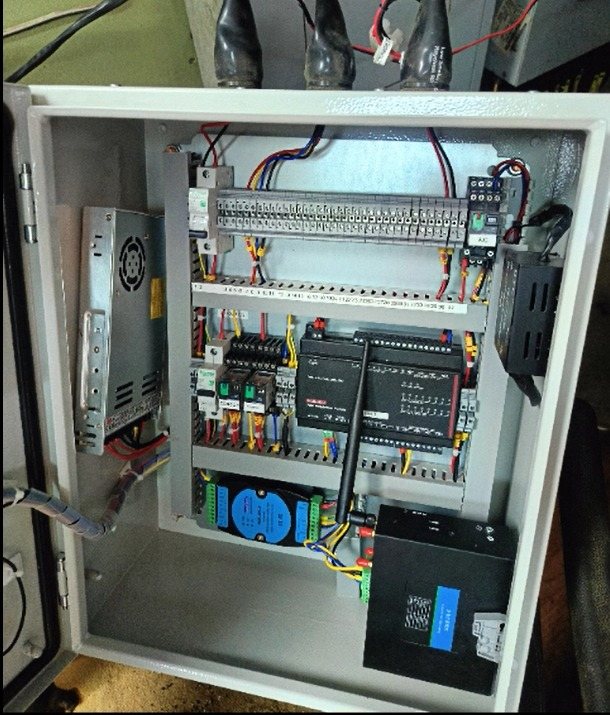
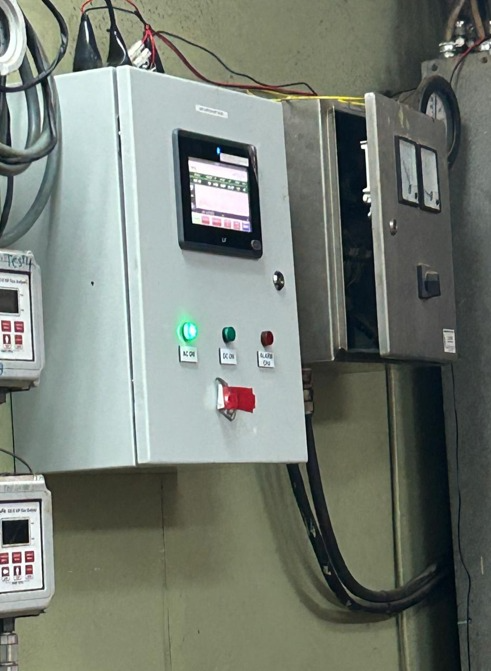
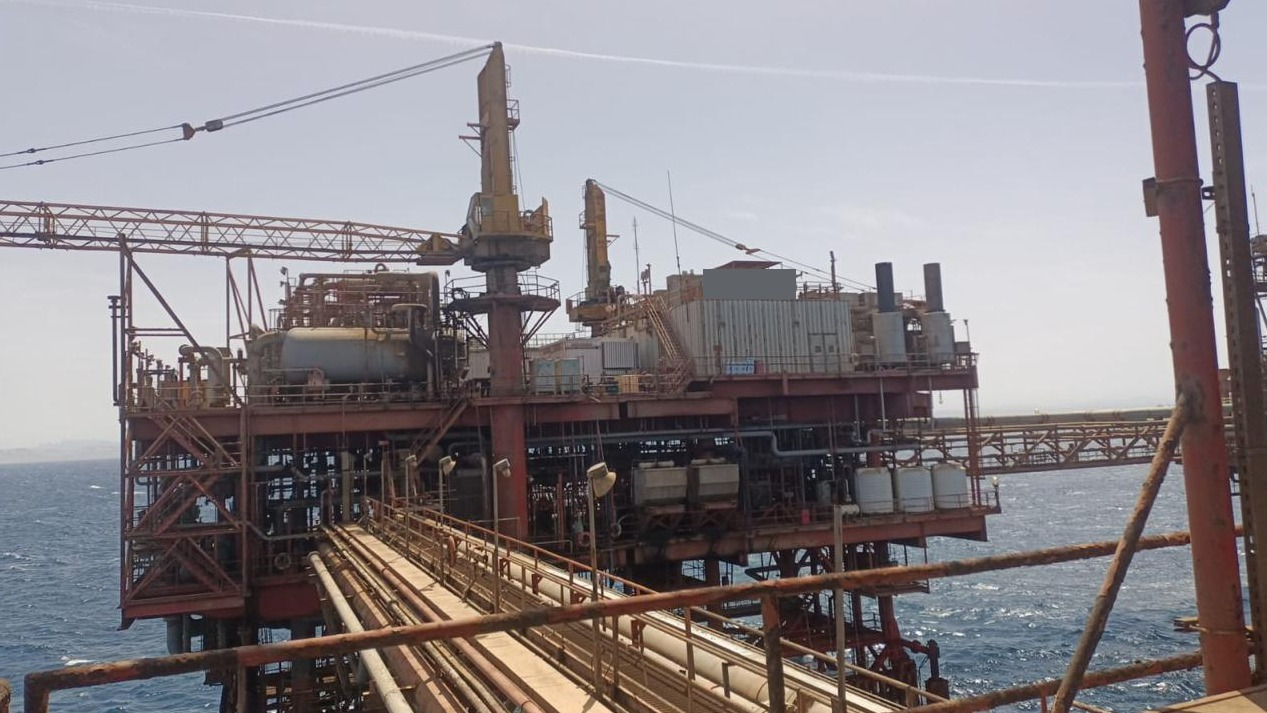
Challenge: Detection Without Blind Spots
The operator faced a familiar problem. Traditional point sensors cover only their immediate location. With thousands of potential leak points across a single platform, deploying enough point sensors is prohibitively expensive. Manual inspections happen weekly or monthly — they provide snapshots, not continuous coverage.
The operator needed something different: continuous, real-time methane detection across wide areas, with data flowing reliably to onshore control centers.
Open-path TDLAS uses a laser beam projected across an open path — sometimes hundreds of meters — to detect methane along the entire line of sight. Unlike point sensors that sample only the air immediately around them, open-path detection covers corridors, pipe racks, and process areas comprehensively. TDLAS technology was first developed by NASA‘s Jet Propulsion Laboratory to search for life on Mars and has since accurately quantified methane emissions from oil and gas assets worldwide. But TDLAS creates a new problem. The sensor generates high-volume raw spectral data. Offshore bandwidth — whether satellite or cellular — is limited and expensive. Transmitting all that raw data is not feasible.
The operator also needed future-proofing. After the pilot phase, the system would need to integrate with Yokogawa DCS. Any gateway chosen had to support industrial protocols and secure integration.
TG452 IoT Edge / LoRa Gateway
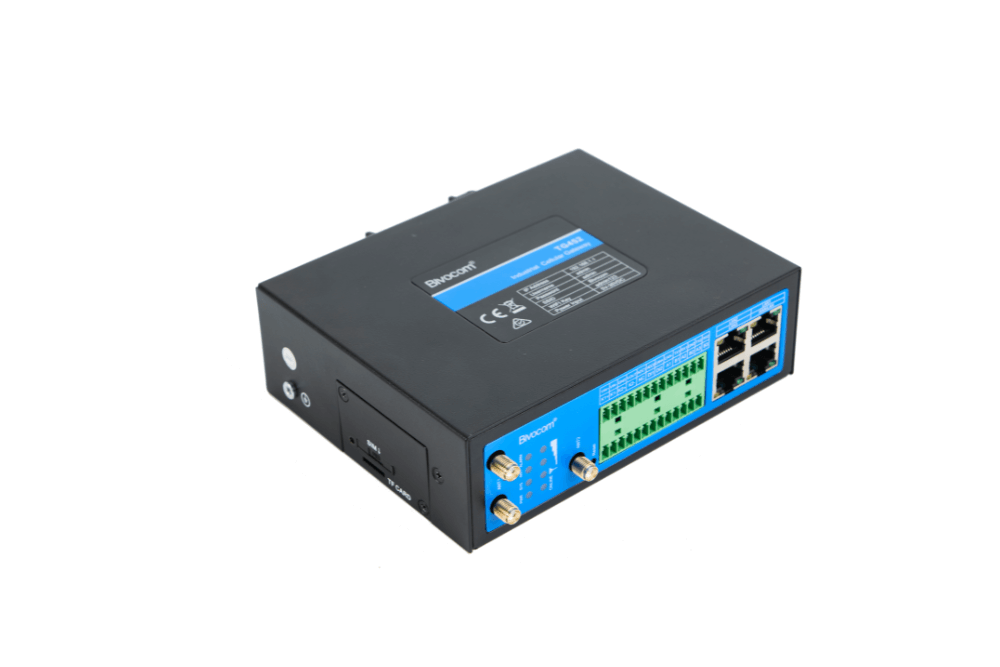
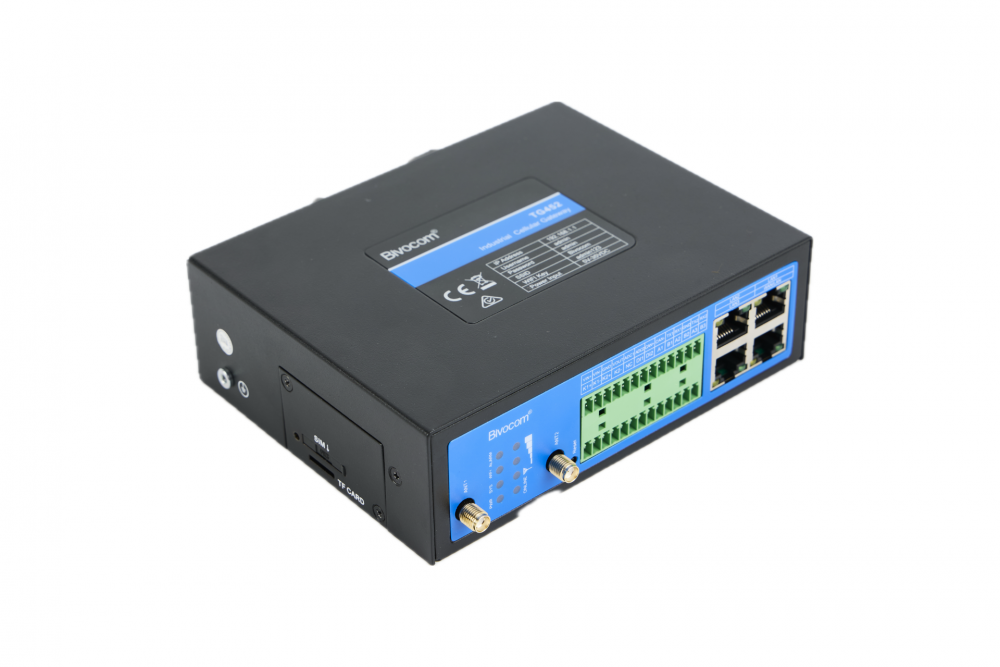
TG452 sits at the center of the design, bridging front-end detection hardware, on-site controls, and remote management systems. Available in both IoT Edge and LoRa variants. The Edge version delivers powerful local processing and rich I/O for critical equipment, while the LoRa version enables low‑power, long‑range wireless sensor networking across the platform.
Sensor connectivity — no adapters needed. With 3× RS485, 2× RS232, 2× ADC, and 4× Ethernet ports, TG452 connects directly to open-path laser detectors, point sensors, and auxiliary meters — no extra conversion hardware required.
LoRa wireless expansion — solving the cabling problem. TG452 LoRa supports up to 10 km line‑of‑sight communication, enabling wireless deployment of auxiliary sensors (wind, temperature, vibration) across the platform — without new cabling.
Edge computing — solving the bandwidth problem. Powered by a 32‑bit ARM Cortex‑A7 processor running OpenWRT‑based Linux with Python, C/C++, Node‑RED, and Ubuntu. TG452 processes raw TDLAS spectral data locally — filtering noise, calculating concentrations, and transmitting only essential results. This dramatically reduces bandwidth use, critical when satellite connectivity costs are measured per megabyte.
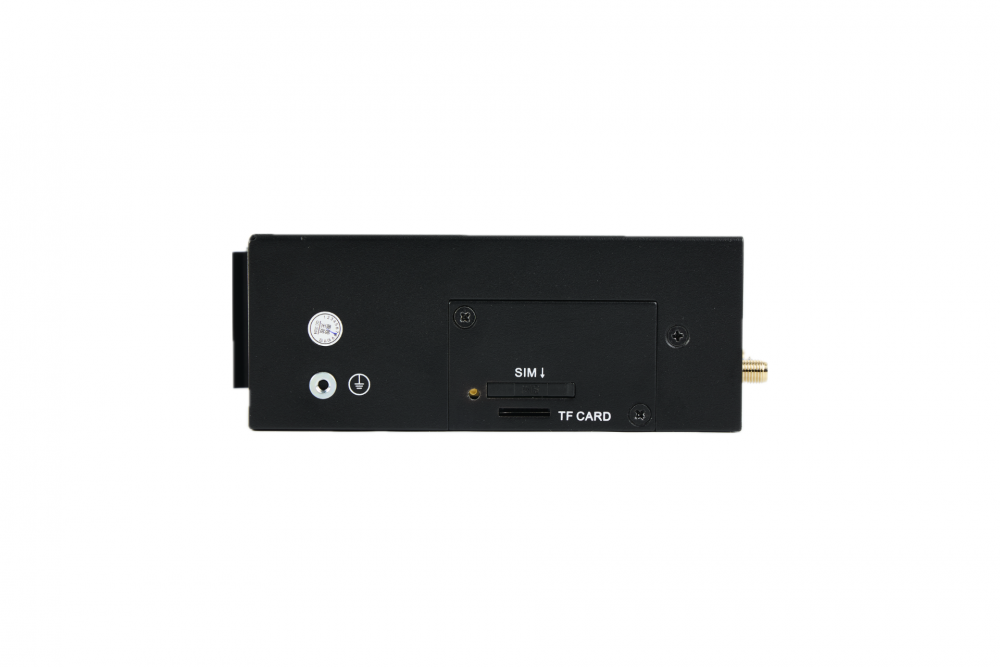
Connectivity redundancy — no single point of failure. Offshore cellular is unreliable. TG452 dual SIM (eSIM optional) with auto‑failover keeps data flowing, while onboard flash and SD card enable local caching and breakpoint resumption. During total outage, readings are stored locally and auto‑uploaded upon reconnection, ensuring unbroken compliance records.
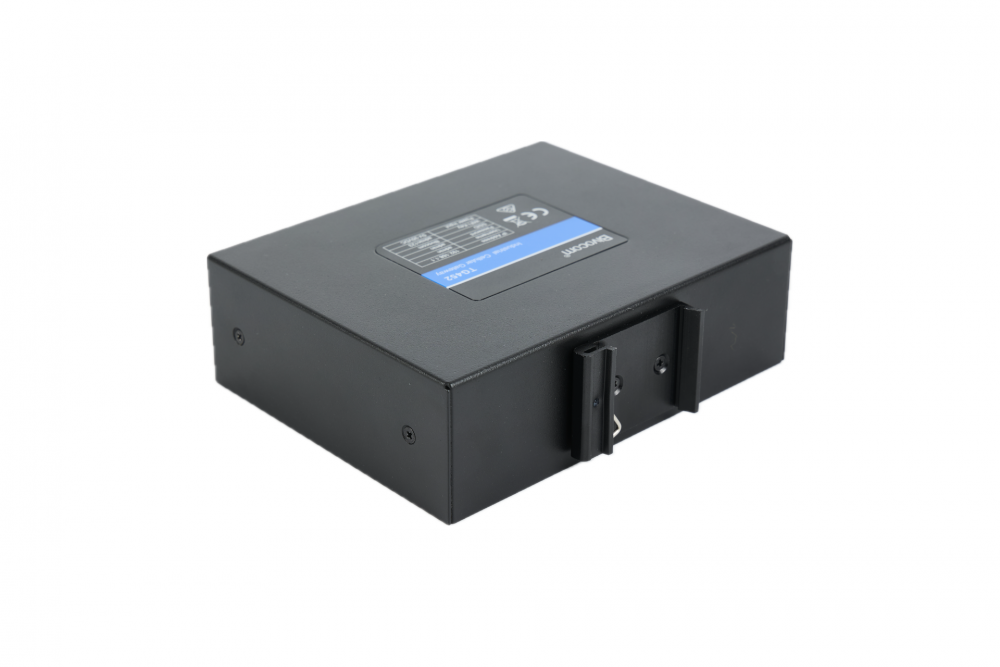
Industrial durability — built for the environment. Built with industrial-grade components and an all-metal DIN-rail case, TG452 withstands -35°C to +75°C, vibration, humidity, and salt spray. It accepts 5–35V DC input and fits standard cabinets.
DCS integration — ready for Yokogawa. Supporting Modbus RTU, Modbus TCP, MQTT, and VPN protocols (IPsec, OpenVPN, WireGuard), TG452 ensures seamless data flow into Yokogawa’s CENTUM DCS, which natively supports Modbus/TCP. This eliminates the need for additional protocol converters when moving to full production.
Solution
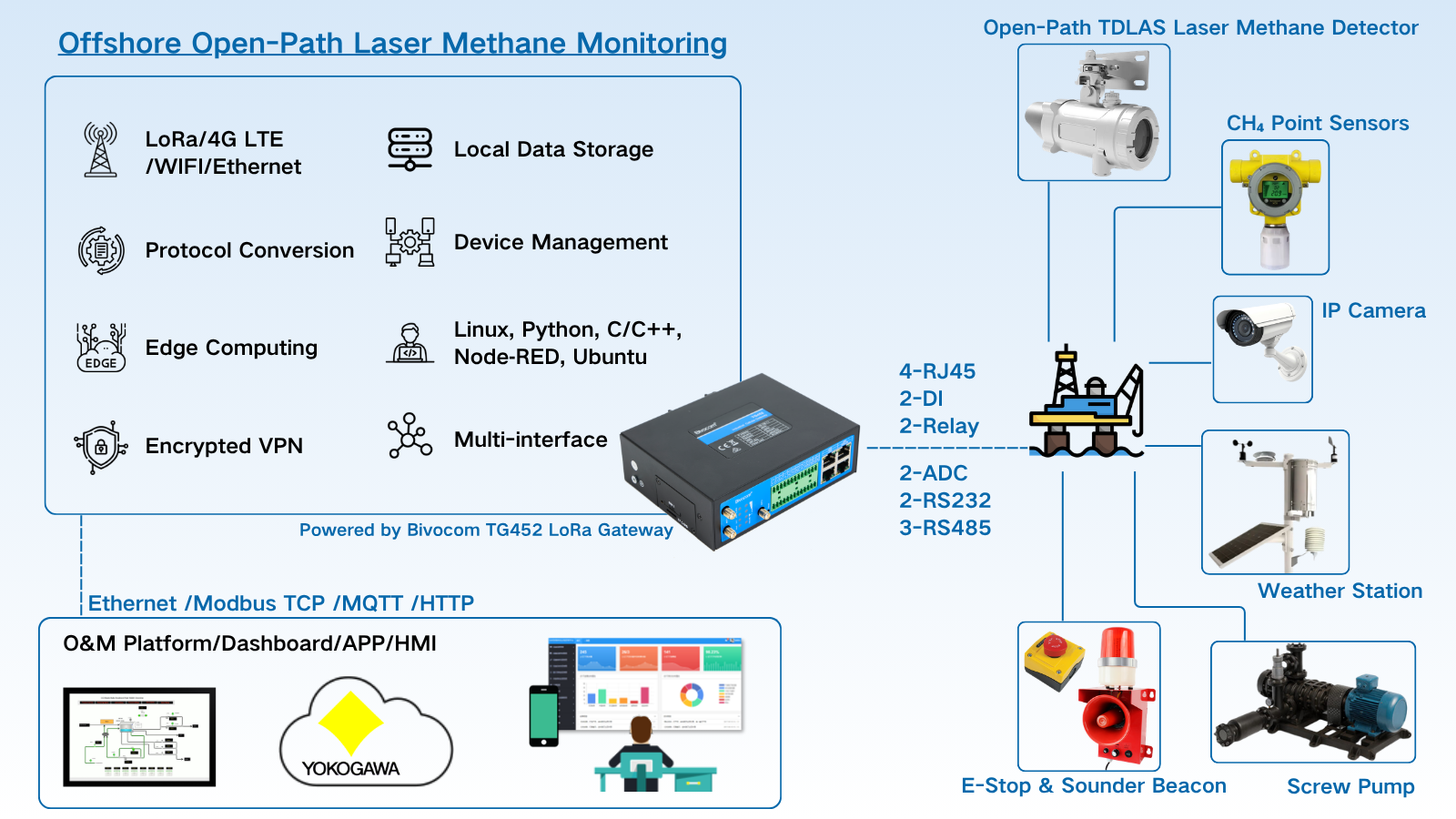
At the Sensor Layer, the open‑path TDLAS detector connects to the TG452 via RS485/Modbus RTU, (when equipped with the LoRa variant) LoRa‑enabled auxiliary sensors communicate wirelessly over distances up to 10 km. The Gateway Layer—the TG452 itself—aggregates all inputs, processes raw spectral data locally to calculate methane concentrations, and triggers local alarms through its relay outputs when thresholds are exceeded. Finally, the Control Layer receives processed data over 4G LTE (with dual‑SIM failover) and VPN‑secured tunnels, delivering it to the Yokogawa CENTUM DCS via Modbus TCP and to cloud platforms via MQTT for dashboard visualization and compliance reporting.
Core Components & Communication Flow
- Sensor-to-Gateway: The open-path TDLAS detector connects via RS485 using Modbus RTU. LoRa sensors (wind, temperature, vibration) link wirelessly. TG452’s rich I/O also supports pressure transmitters, level sensors, H₂S detectors, PLCs, and network cameras. DI inputs monitor equipment status, while DO relays (up to 5A) enable local control of alarms, pumps, valves, and compressors.
- Gateway Processing: The ARM processor runs edge algorithms—filtering noise, converting spectral data to concentration readings, and executing local alarm logic. Critical automation runs on the gateway without cloud latency: if methane exceeds threshold, the system triggers alarms or shuts down equipment via DO relays. Only essential data transmits onward, reducing bandwidth consumption.
- Gateway-to-Control: Data flows over 4G LTE with dual-SIM redundancy and SD card caching for outage protection. The TG452 integrates with Yokogawa DCS over Modbus TCP and cloud platforms via MQTT for remote monitoring and automated regulatory reporting. Secure VPNs enable bidirectional control—operators can remotely manage pumps, valves, and emergency shutdown from onshore.
Why This Architecture Matters
This design delivers five critical advantages for offshore methane monitoring:
- Wide‑area coverage without cabling: open‑path detection covers hundreds of meters, while LoRa reaches auxiliary sensors across the entire platform
- Bandwidth‑efficient transmission: edge processing reduces the volume of data sent over expensive satellite/cellular links
- Zero data loss: local SD card caching ensures continuous compliance records
- Seamless DCS integration: native Modbus TCP eliminates the need for protocol
- Local fail‑safe operation: relay outputs trigger alarms even when the network is down
About Bivocom
With over a decade of industrial IoT and M2M experience, Bivocom designs and manufactures rugged wireless communication solutions for the world‘s most demanding environments. This offshore methane monitoring deployment is one example of how our approach solves a critical industry challenge—turning fragmented field data into actionable, continuously available intelligence. By bridging the gap between detection hardware and control systems, we help operators secure safety, simplify compliance, and reduce operational risk.
- Open platform & ecosystem compatibility: Native support spans our device management platform, custom industry applications, and mainstream third-party IoT clouds, SCADA, and DCS systems.
- Global industry experience: IIoT deployments across energy, oil and gas, water, smart cities, agriculture, transportation, and environmental monitoring in 90+ countries.
- End-to-end support: Full lifecycle assistance—from selection and integration to rollout—plus OEM/ODM and firmware customization for project-specific requirements.
-on-Bivocom-TG465-IoT-Edge-AI-Gateway-with-Ubuntu-768x512.png "Install Ollama & Llama (LLM, large language model)) on Bivocom TG465 IoT Edge AI Gateway with Ubuntu")


Comment