How to Choose the Right Device
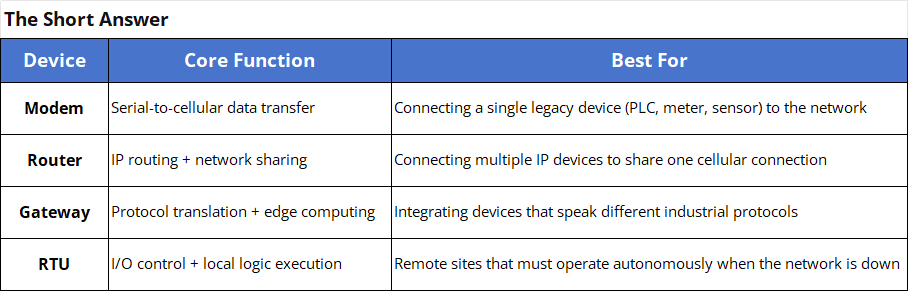
You’re standing in front of a cabinet full of industrial IoT devices. Everything looks vaguely similar—metal enclosures, blinking LEDs, antenna ports. But the labels say different things: “Cellular Modem. Industrial Router. IoT Gateway. RTU.” Pick the wrong one, and you could end up with a device that can’t talk to your sensors, or one that costs twice as much as you needed to spend. Pick the right one, and your entire deployment runs smoothly for years. So what’s the actual difference—and how do you choose? Given the breadth of this topic, we’ve split it into two articles. This first part covers modems and routers—the devices that focus on connectivity. We’ll cover gateways and RTUs—which handle translation and control—in a follow-up piece.
What Is a Modem?
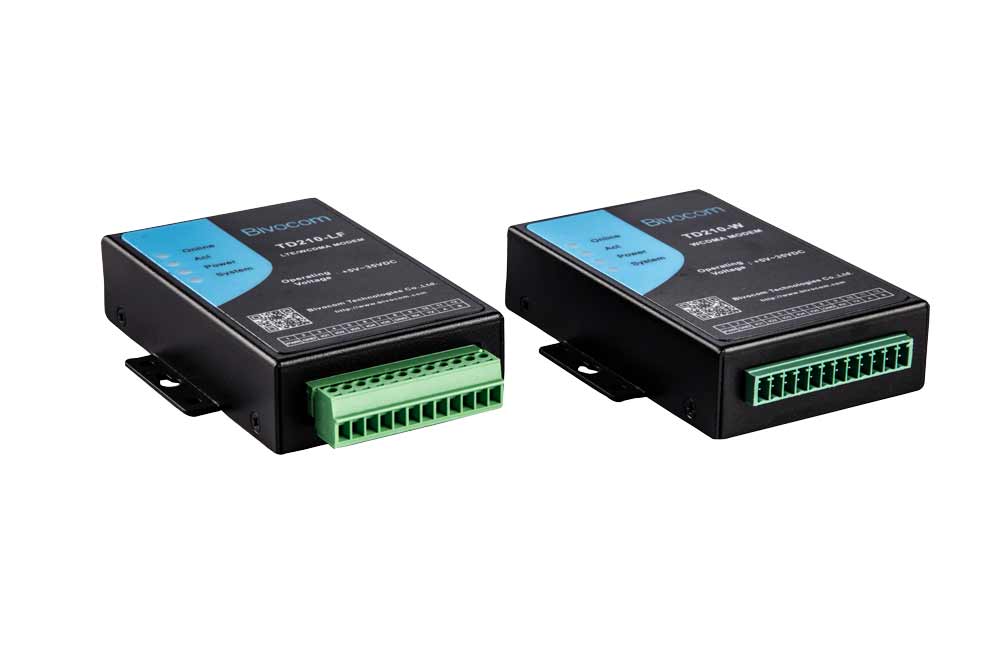
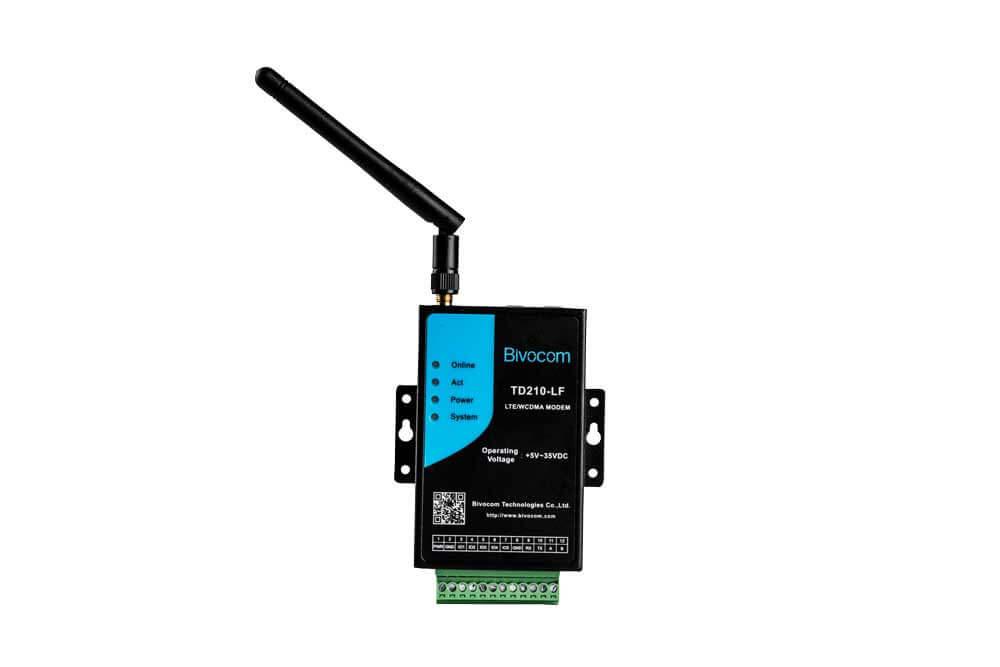
A modem (modulator-demodulator) is the most straightforward of the four. It takes serial/USB data from a device, and converts it into cellular signals for transmission over 4G/3G/2G networks. Think of it as a device-to-cellular bridge. It doesn’t manage traffic, route packets, or process data. Its job is simple: move data reliably from point A to point B.
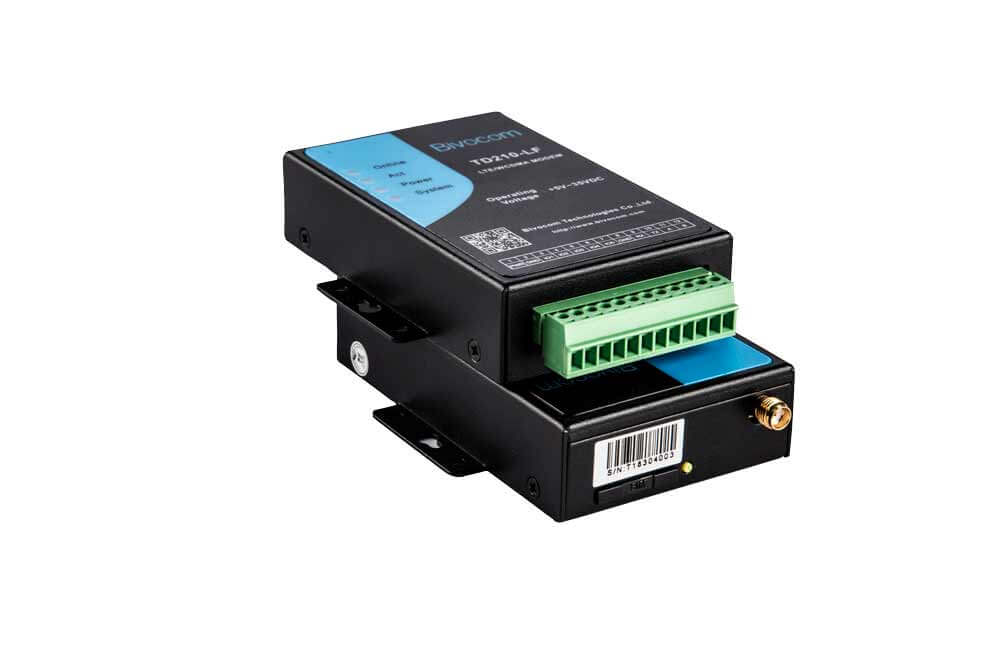
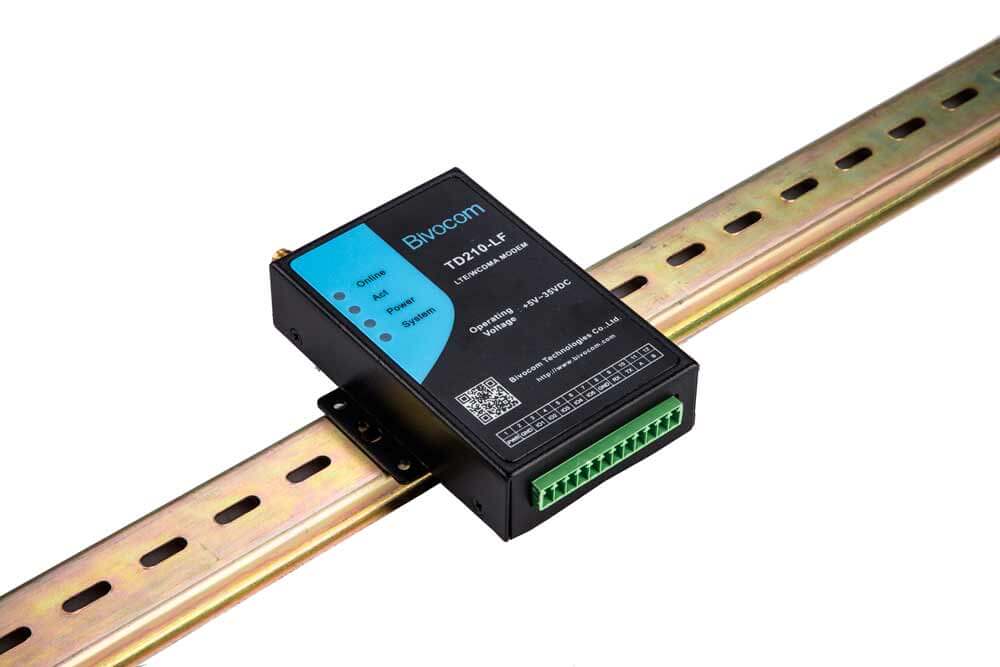
What makes modern industrial modems more capable than their consumer counterparts is the embedded intelligence. Like Bivocom TD210, for instance, is built around an industrial-grade 32-bit MCU with hardware and software watchdogs to ensure reliability in harsh environments. Key specifications:
- 1× RS232, 1× RS485, 1× 50Ω SMA, 1× SIM slot
- Global 4G/3G/2G band support
- Protocols: Transparent, Modbus RTU, MQTT (no TLS), TCP/UDP
- Metal IP30, wall-mount, 91x58x22mm, 208g, –35~+75°C, 5–35 VDC (standard 12V/0.5A)
- Up to 5 sync data centers
- Management: Config Tool, SMS, Cloud DMP
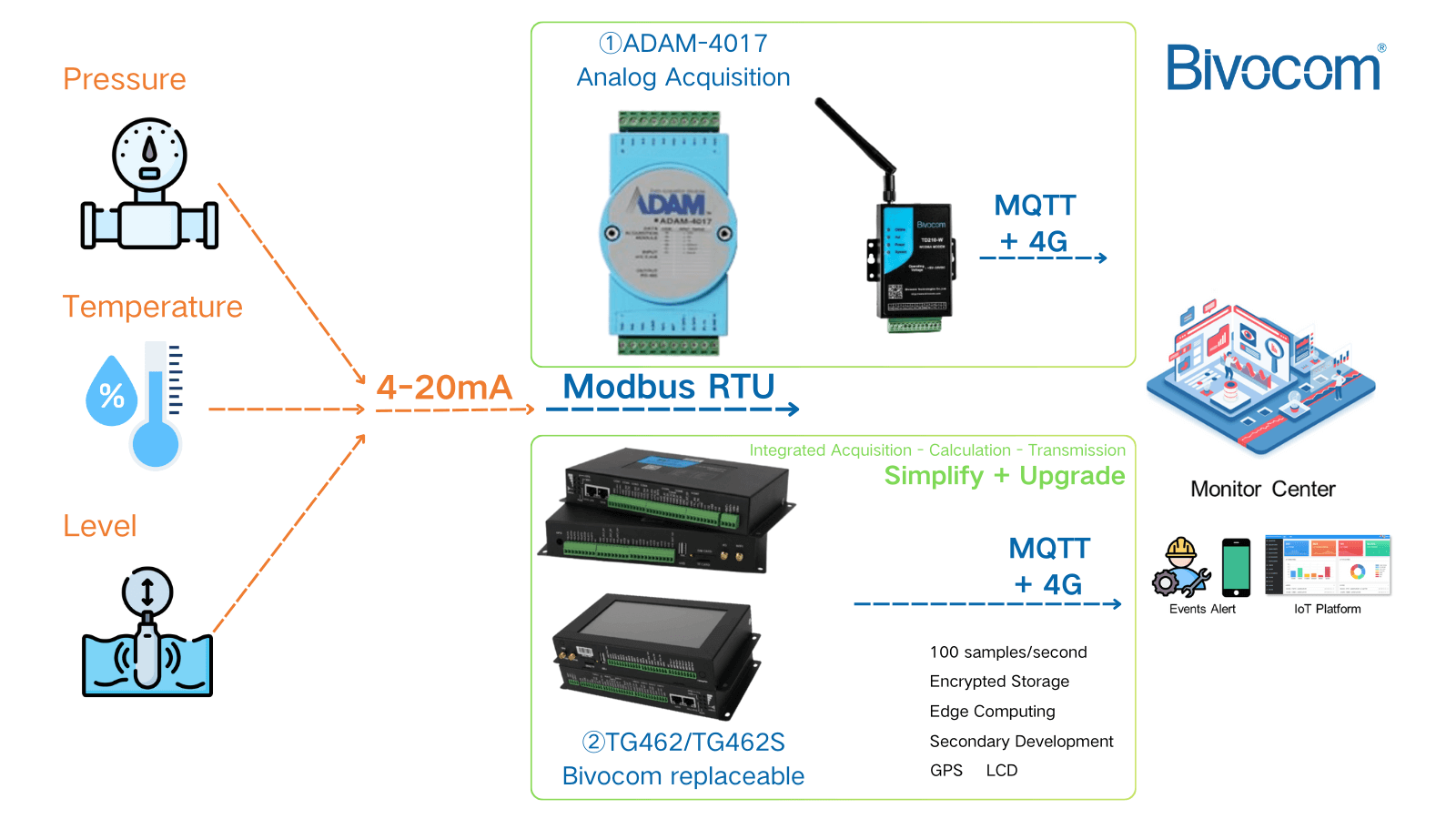
Real World Scenario: Remote Liquid CO₂ Storage Tank Monitoring
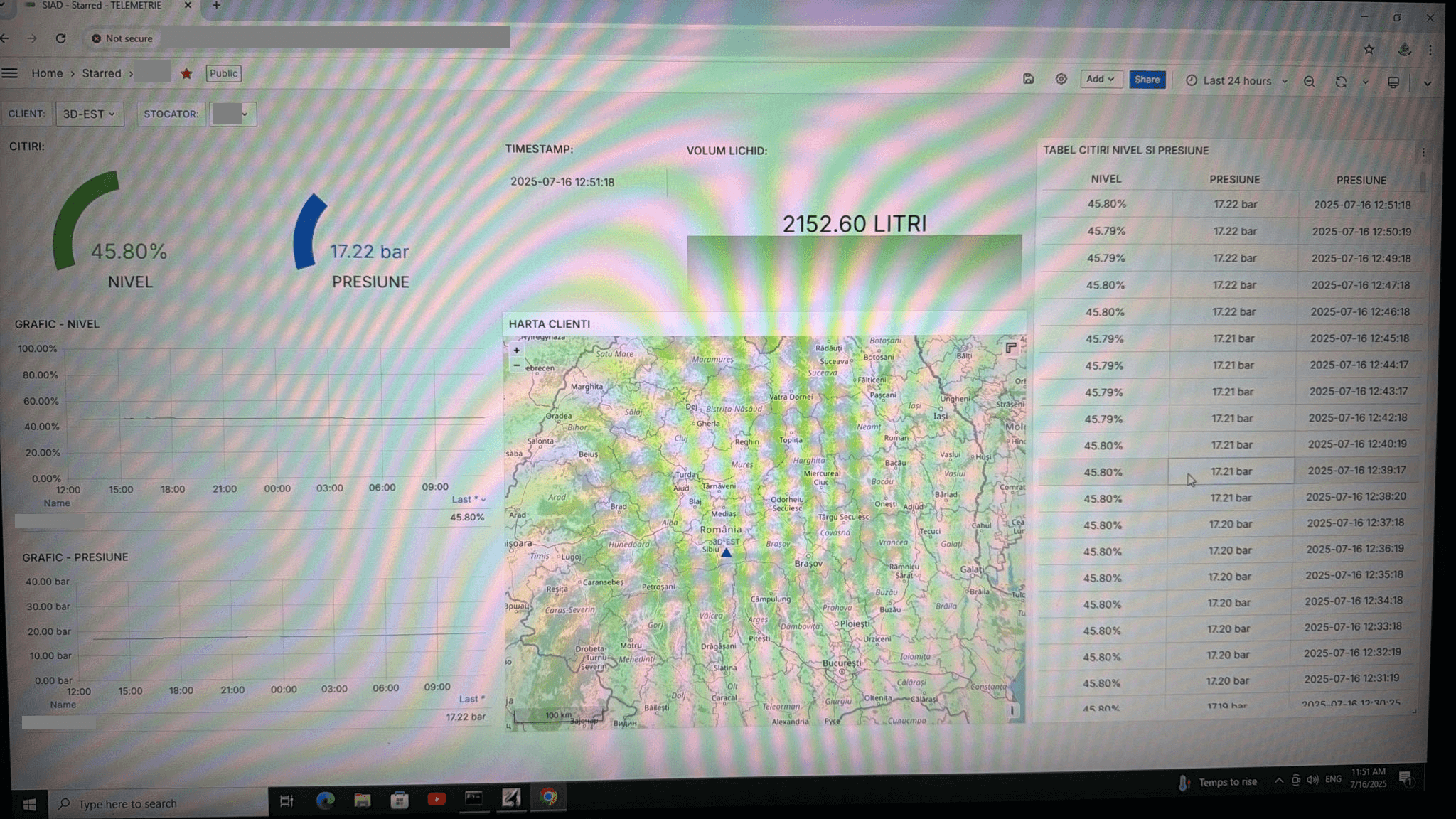
For remote monitoring of liquid CO₂ storage tanks (level, temp, pressure) in a chemical plant 2 km from the control room with no wired network, 4–20 mA analog sensors feed into an ADAM-4017 module which converts signals to Modbus RTU. The Bivocom TD210 industrial modem polls this data via RS485 and forwards it to a cloud platform via 4G, enabling remote real-time access. Built‑in SMS alarms notify operators when parameters go out of safe ranges.
When to Choose a Modem
- You only need to connect one device (controller, PLC, module, or computer) to the cellular network
- Your budget is tight—modems are the most affordable option
However, a modem is not suitable if you need to connect multiple devices, handle different protocols (e.g., BACnet and DNP3), or require local data processing, decision-making, or edge computing.
What Is a Router?
A router takes a single cellular connection and shares it across multiple devices. It creates a local IP network (LAN) that devices connect to via Ethernet ports or Wi-Fi, and it directs traffic between them. Think of a router as a network traffic controller—it assigns IP addresses, manages data flow, provides firewall protection, and supports VPN tunnels with link failover for secure remote access.
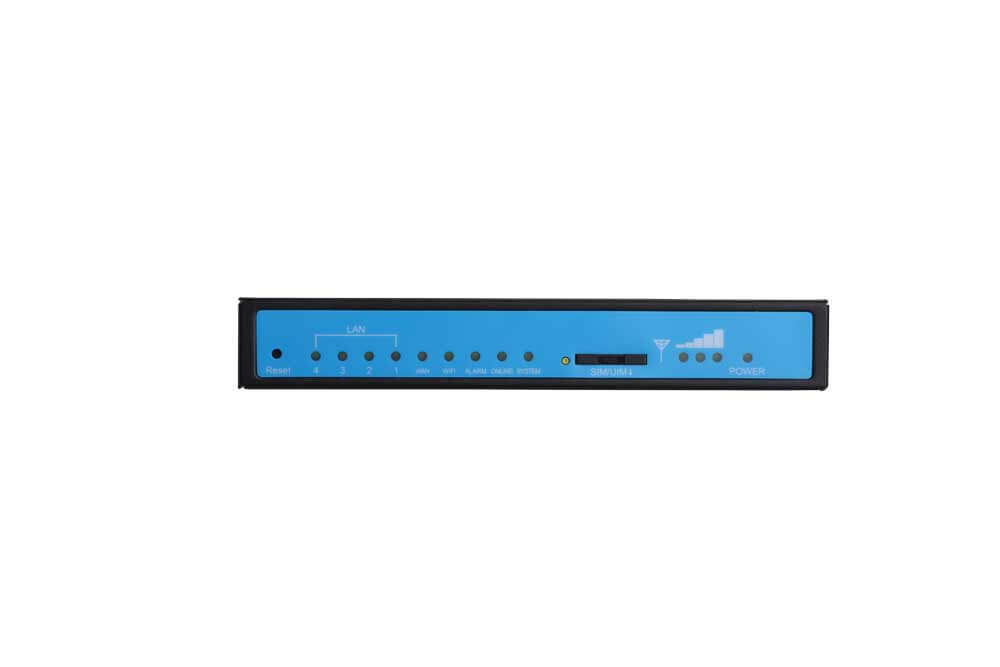
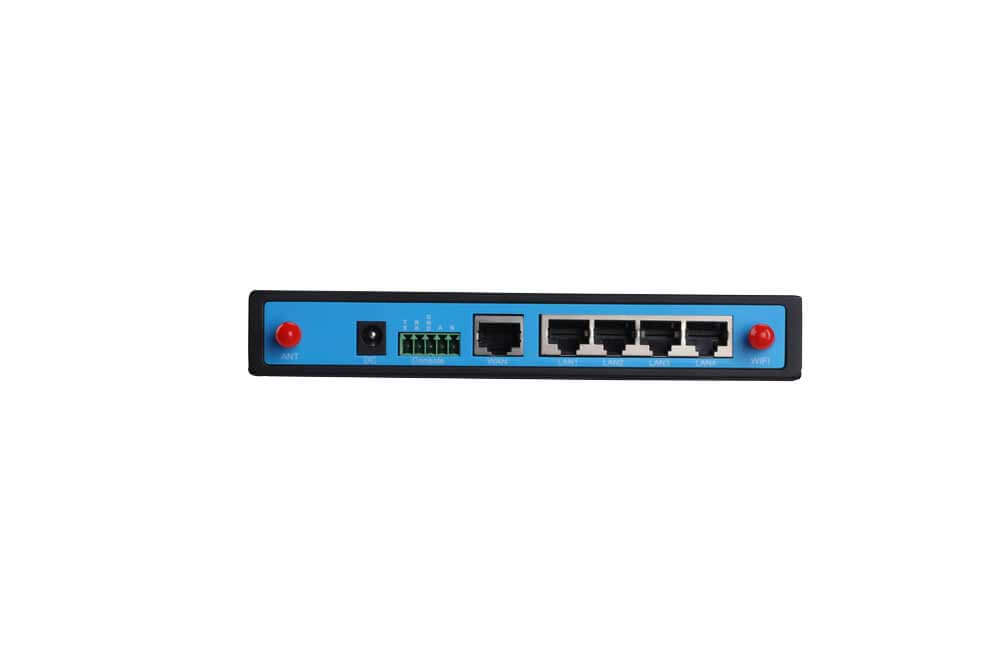
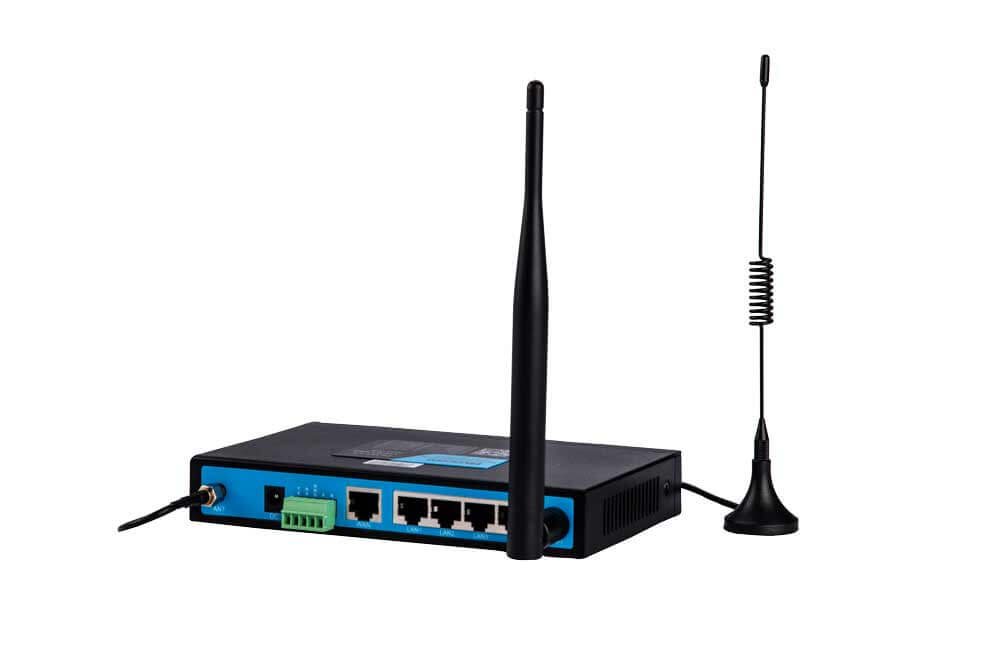
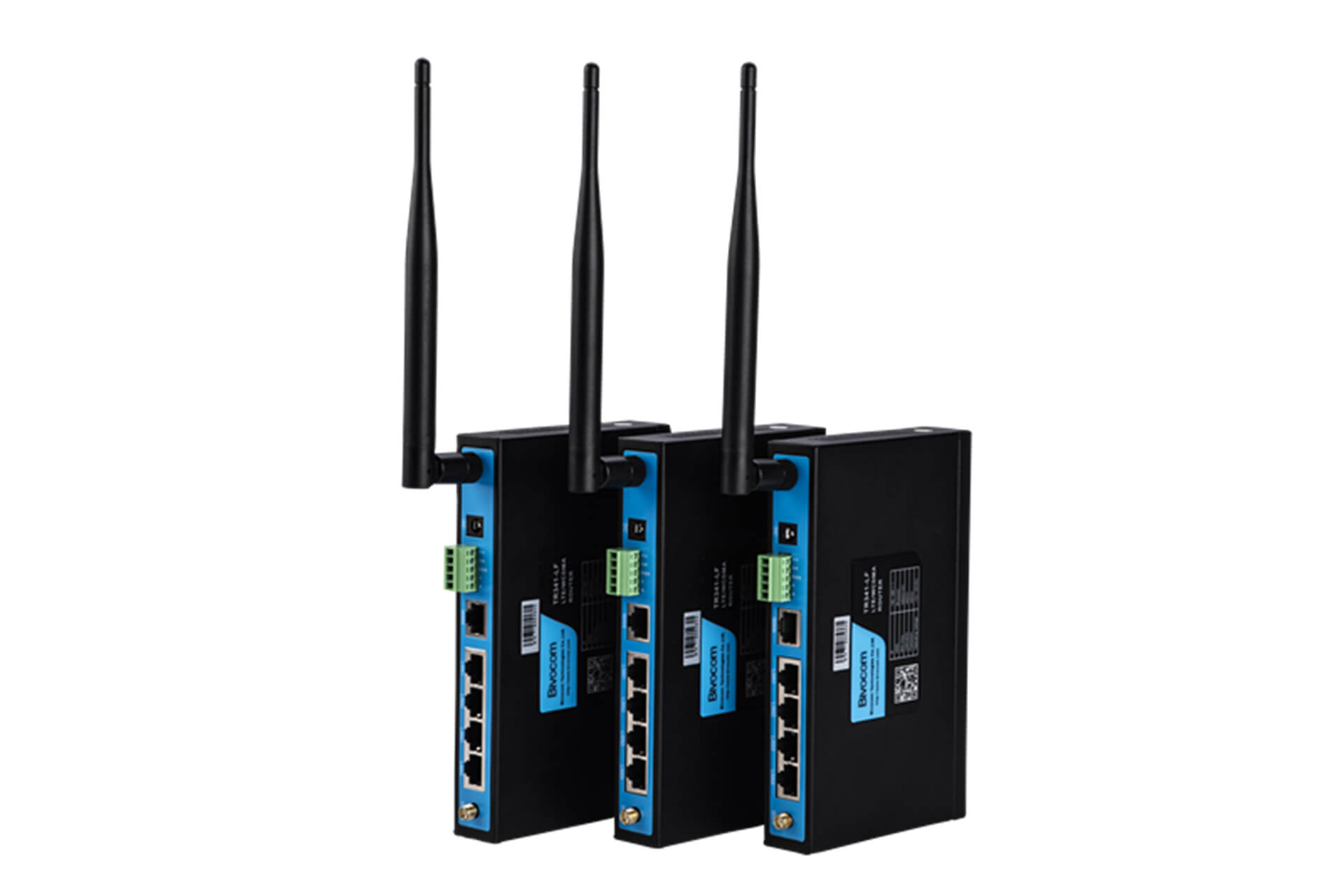
Like Bivocom TR341 is a cost‑effective industrial 5‑port router designed for applications like ATMs, transportation, and remote site connectivity. It offers dual‑SIM failover to switch carriers automatically when signal drops, plus a WAN port that allows auto‑failover between cellular and wired networks. Its integrated GPS enables real‑time asset tracking for mobile deployments. Key specifications:
- 1× WAN + 4× LAN (or 5× LAN), 10/100 Mbps, 1× RS232, 1× RS485
- Wi‑Fi: IEE 802.11 b/g/n, up to 300 Mbps, RADIUS authentication
- GPS*: Built‑in independent module for asset tracking
- Cellular: 1× 50Ω SMA, 1–2 SIM slots (dual SIM for failover*)
- VPN (IPsec, PPTP, L2TP, GRE, OpenVPN)
- MQTT, Modbus (RTU‑to‑TCP), Transparent, SNMP, RIP, OSPF, TCP, UDP, HTTP
Real World Scenario: Smart Traffic Light System
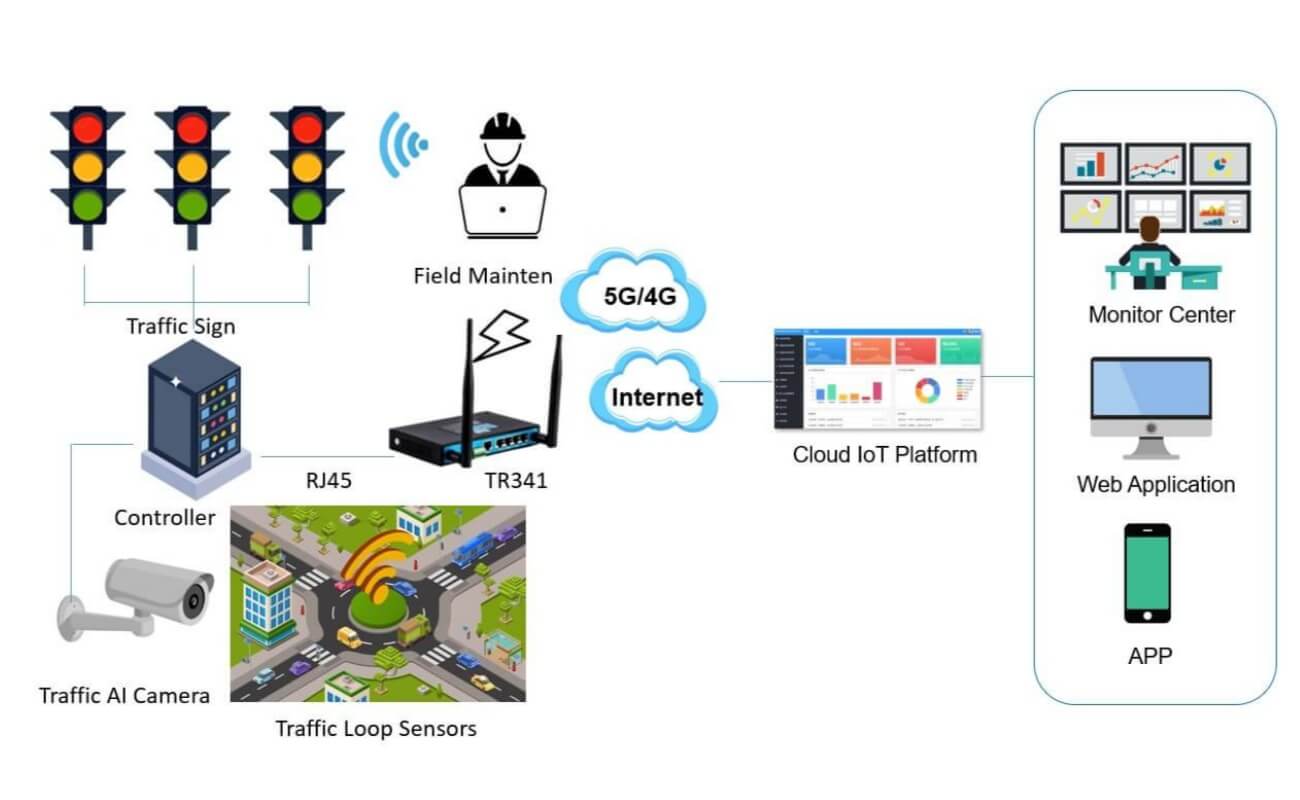
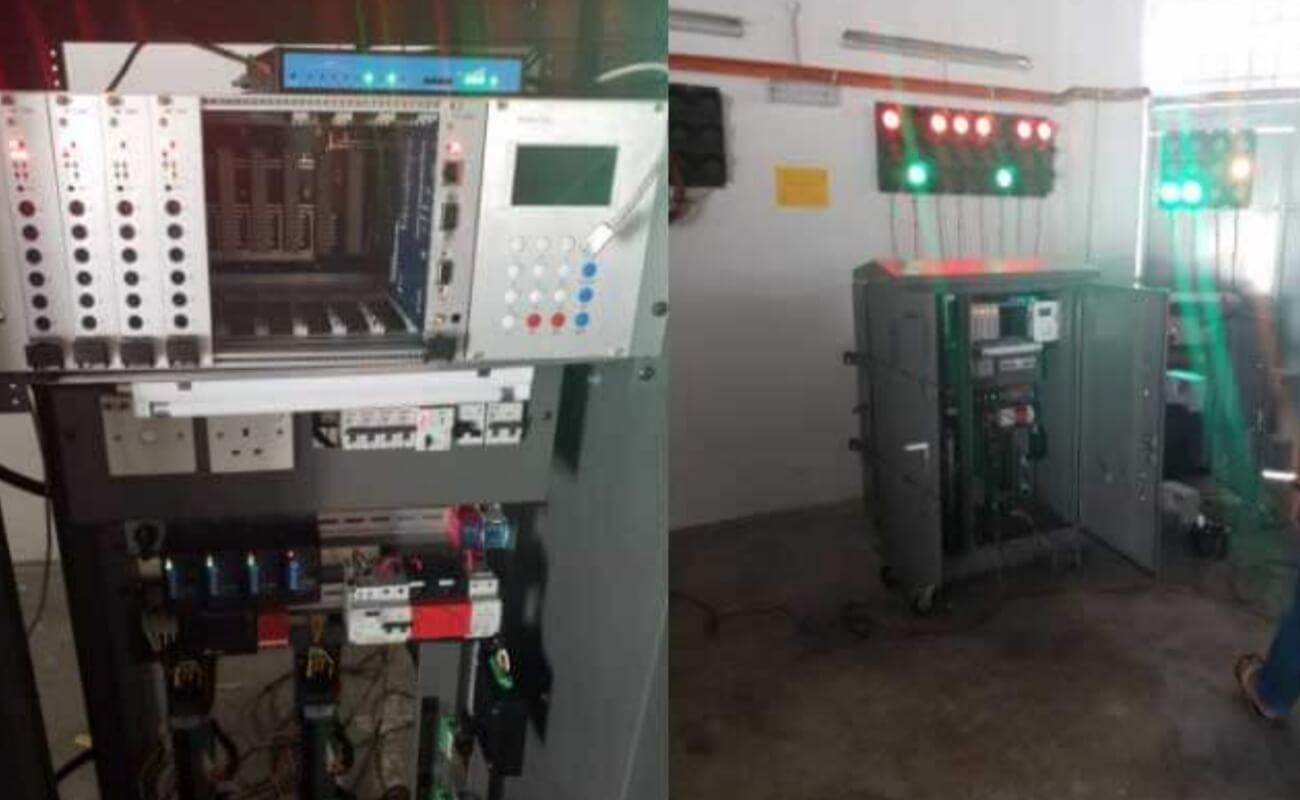
For a city in Asia with traffic lights from multiple vendors on siloed platforms, an ITS provider deployed TR341 industrial 4G routers at each intersection. Each router connects to the traffic control unit, vehicle sensors, and AI cameras, aggregates IP‑based data, and transmits it over 4G to a central cloud dashboard for real‑time monitoring and adaptive signal control. VPN secures the link, and no protocol translation is needed. The unified system reduces congestion and improves traffic flow.
When to Choose a Router
- You have multiple devices that need to share a single cellular connection
- You need to create a local network (LAN) at a remote site
- You need basic routing, firewall, and VPN capabilities
- Your devices already speak the same protocol (they all use IP-based communication)
However, a router is not suitable if your field devices use serial-only protocols (e.g., Modbus RTU sensors without IP conversion), if you need to translate between different industrial protocols, or if you require local data processing or autonomous control logic.
About Bivocom
Bivocom is a global provider of industrial IoT and M2M solutions, with over a decade of experience across 90+ countries. Our portfolio covers GNSS/LoRa/5G routers, gateways, and RTUs, IoT platforms, and scenario-specific sensors—plus OEM/ODM customization—serving industries like energy, water utilities, smart cities, automation, and transportation. This article covered the first two—modems and routers. To make sense of it all, think of it this way:
- Need to get one device online? That’s a modem—like a dedicated phone line for that single piece of equipment.
- Need to connect multiple IP devices through one uplink? That’s a router—like a phone switchboard sharing one line across dozens of desks.
In our next article, we’ll explore gateways and RTUs—the devices that don’t just connect, but translate, process, and control. If you have questions about which device fits your project—or if you’d like to discuss a custom solution—feel free to reach out to us at [email protected]. We’re happy to help you find the right fit.
-on-Bivocom-TG465-IoT-Edge-AI-Gateway-with-Ubuntu-768x512.png "Install Ollama & Llama (LLM, large language model)) on Bivocom TG465 IoT Edge AI Gateway with Ubuntu")


Comment