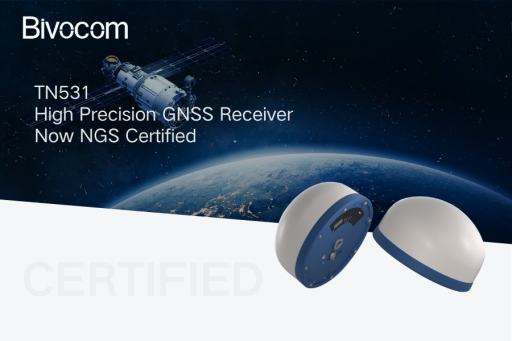
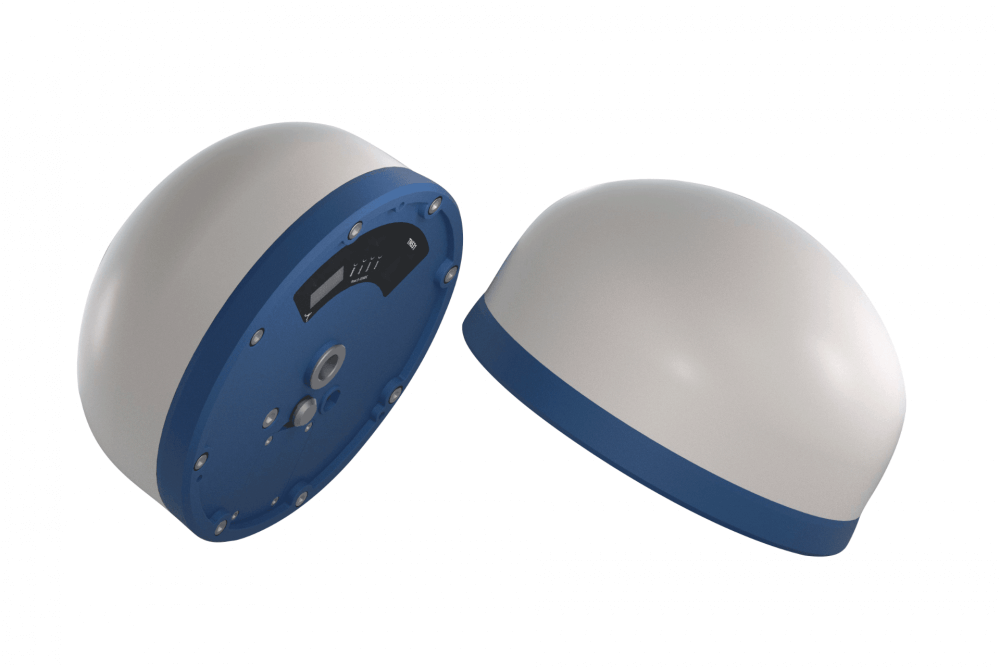
December 15, 2025 — Bivocom, a global leader in industrial IoT and M2M solutions, is pleased to announce that its TN531 High-Precision GNSS Receiver has achieved certification from the U.S. National Geodetic Survey National Geodetic Survey (NGS). This milestone underscores the receiver’s adherence to the global gold standard for GNSS antenna calibration accuracy, meeting NGS’s rigorous benchmarks for phase center precision. For organizations dependent on pinpoint positioning for structural health monitoring, deformation analysis, and disaster assessment. This certification guarantees traceable, sub-millimeter-calibrated data. Critical for high-stakes operational and safety decision-making.
At the core of reliable high-precision GNSS performance is the antenna’s phase center—the electromagnetic point where satellite signals are measured. Unlike a physical reference marker, this phase center shifts marginally with signal arrival angles, introducing subtle biases that can erode measurement accuracy. GNSS antenna calibration resolves these inconsistencies through two fundamental parameters:
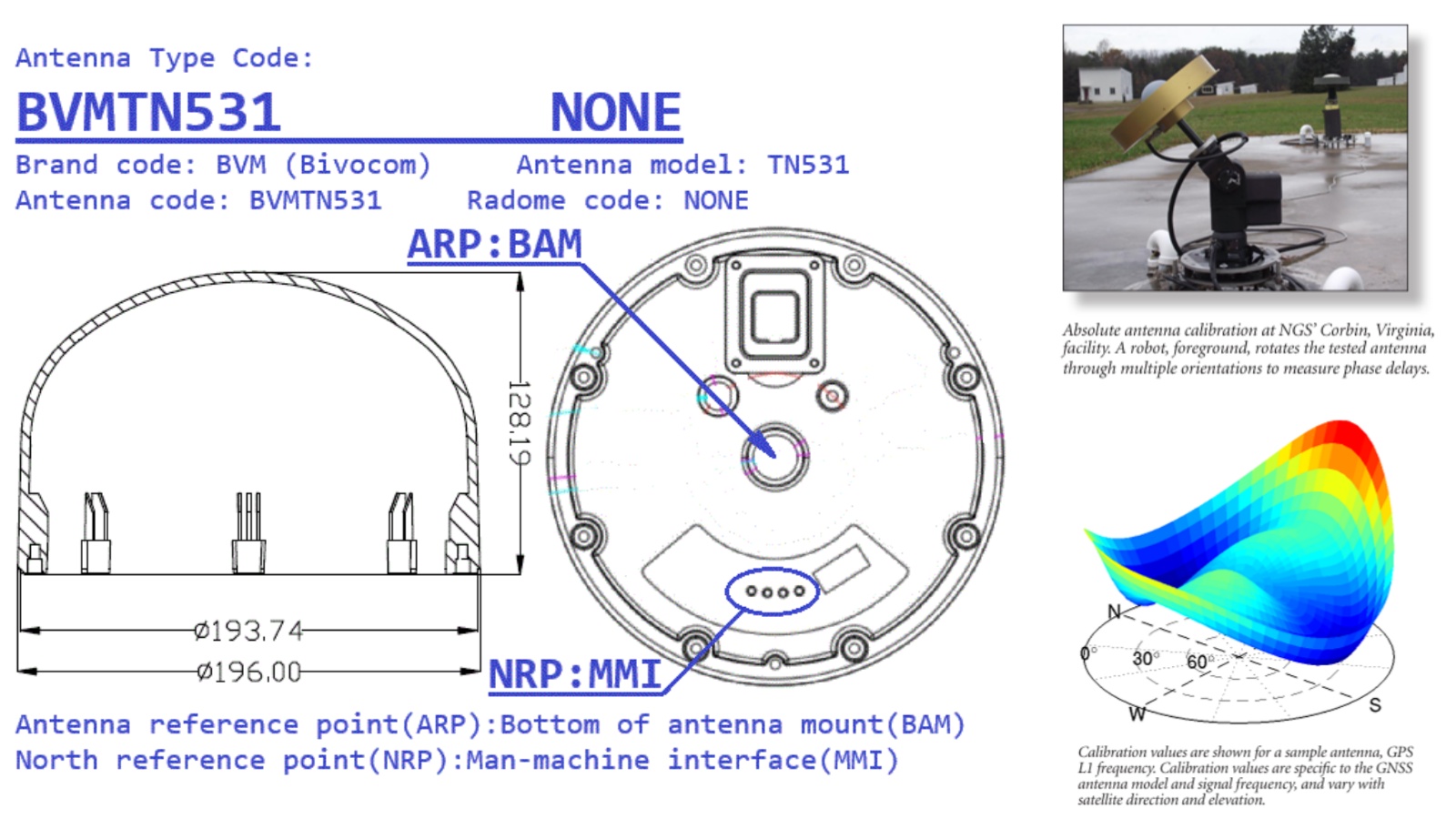
- Phase Center Offset (PCO): A fixed 3D offset between the antenna’s Antenna Reference Point (ARP, its mechanical mounting point) and its average electrical phase center, aligned with North/East/Up (NEU) axes.
- Phase Center Variation (PCV): Directional corrections that compensate for phase center shifts across varying azimuth and elevation angles.
These calibrations are far more than technical formalities. They enhance the TN531 native 2.5mm static accuracy and 8mm RTK precision, elevating its reliability for high-stakes use cases. By leveraging NGS’s standardized PCO/PCV data, the TN531 effectively mitigates antenna-induced errors that might. Otherwise compromise critical applications such as bridge deformation monitoring and landslide detection.
NGS: What Is It & Why Globally Trusted?
The National Geodetic Survey (NGS)—a preeminent division of the U.S. National Oceanic and Atmospheric Administration (NOAA)—is the global gold standard for geodetic precision and GNSS calibration. For over a century, it has maintained the National Spatial Reference System (NSRS), a foundational framework that underpins accurate mapping, navigation, and critical infrastructure projects across the U.S. and beyond.
What sets NGS apart as a trusted global authority? Three core pillars define its credibility:
- Uncompromising Quality Control: NGS operates state-of-the-art robotic calibration facilities and adheres to ISO-aligned protocols, ensuring every calibration result is traceable to international metrological standards.
- Open, Interoperable Standards: NGS publishes calibration data in universally accepted formats (ANTEX, ANTINFO) and makes its database publicly accessible, fostering global interoperability for high-precision GNSS ecosystems.
- Industry-Centric Expertise: NGS’s calibration methodologies are developed in collaboration with engineers, researchers, and government agencies—tailored to address real-world challenges in structural monitoring, disaster response, and geospatial intelligence.
For organizations worldwide, NGS Certification is more than a credential. It guarantees data integrity, cross-border compatibility, and compliance with the most rigorous precision requirements. This trust drives leading enterprises and government bodies to rely on NGS-calibrated solutions for mission-critical applications.
NGS’s tailored calibration workflow for the TN531 is a rigorous, repeatable process designed to fully characterize the antenna’s phase center behavior. This lays the technical foundation for TN531 NGS Certification:
- Baseline Configuration: The TN531’s integrated GNSS antenna is mounted alongside an NGS-qualified reference antenna on precision-surveyed concrete pedestals, establishing a north-south baseline for controlled comparison.
- Multi-Azimuth Data Capture: The TN531 rotates through four cardinal directions (north, east, south, west), collecting hours of continuous data per position to capture phase center behavior across all real-world signal angles.
- Advanced Differential Measurement: NGS employs triple-differencing techniques to isolate and mitigate satellite orbit errors, atmospheric interference, and receiver biases—ensuring measurements reflect only the antenna’s true performance.
- Comprehensive PCO/PCV Calculation: Specialized algorithms compute 3D Phase Center Offset (PCO) values and direction-dependent Phase Center Variation (PCV) corrections, covering all GNSS frequencies supported by the TN531.
- Certification & Protocol Integration: Calibration results are validated against NGS’s strict accuracy benchmarks, then formatted as ANTEX and ANTINFO files that seamlessly integrate with the TN531’s native RTCM/RINEX protocol support.
This meticulous process ensures the TN531 delivers consistent performance even at low elevation angles—where uncalibrated antennas often struggle. It solidifies the reliability and value of its NGS Certification for high-stakes applications.
TN531: NGS-Certified Precision Meets Industrial-Grade Durability
The TN531 exceptional hardware and capabilities are amplified by its NGS Certification—transforming robust specifications into trust-validated, mission-ready performance. Below is the seamless alignment:
2. 6-Axis IMU + NGS-Calibrated Antenna = Superior Compensation
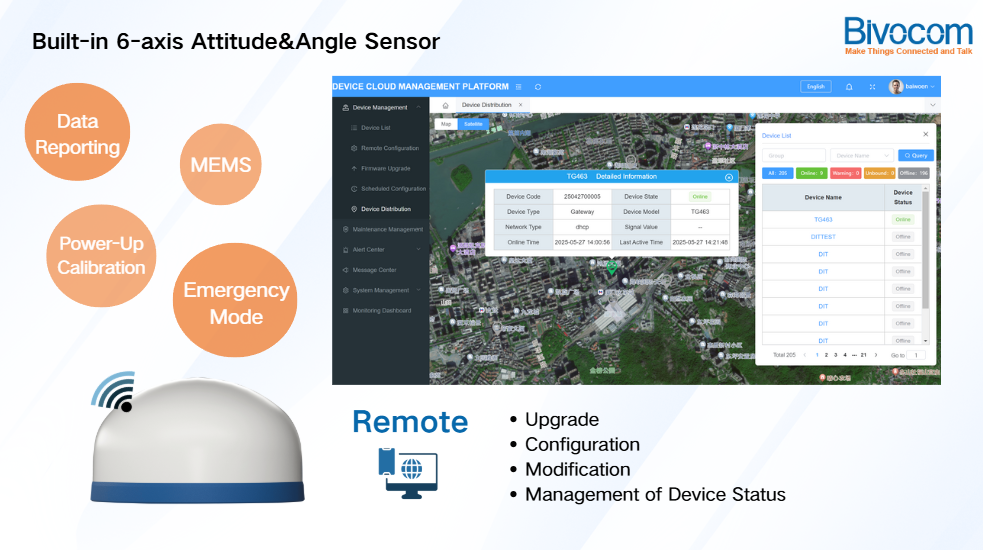
Embedded 6-axis MEMS IMU (20Hz update rate) offsets vibrations and mounting micro-shifts. Paired with NGS’s PCO/PCV calibration, it eliminates cumulative antenna-induced errors, ensuring consistent precision for long-term structural monitoring (e.g., dams, bridges) and dynamic scenarios (landslide/tectonic tracking).
3. IP68 Ruggedness + Built-in 4G = Confident Deployment
IP68-rated housing withstands -35°C to +75°C temperatures, submersion, and corrosion. The integrated 4G antenna delivers real-time data transmission. NGS Certification guarantees measurement reliability. This holds true even in harsh environments. The data is trusted by regulatory bodies and engineering standards.
4. Versatile Interfaces + Standard Protocols = Seamless Integration
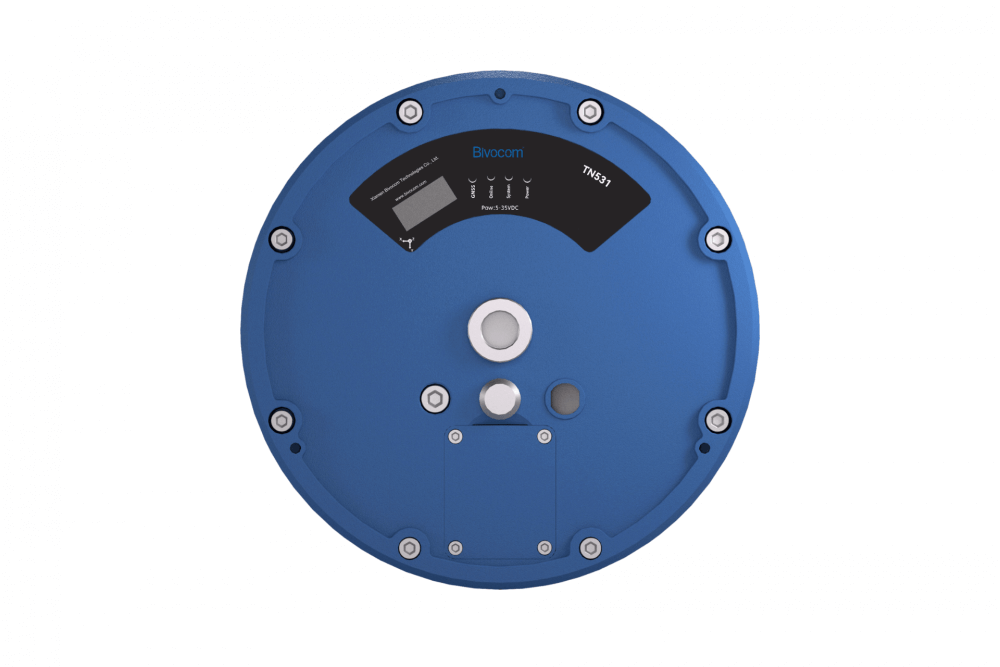
1x RS232 (debug), 1x RS485, 1x pulse input (5-35V) support IoT sensor integration (crack meters, rain gauges). Supports RTCM 3.X, RINEX, NMEA, MQTT and Modbus RTU. Works seamlessly with NGS’s ANTEX/ANTINFO files. Syncs smoothly with industry tools, SCADA systems and cloud platforms—no workflow disruptions for calibrated high-precision data.
Next Steps: Access Certification Calibration Files
Obtaining and applying the NGS calibration for your TN531 is a straightforward process that unlocks its full potential:
- Visit the NGS Antenna Calibration Database (https://geodesy.noaa.gov/ANTCAL/#)
- Select “Bivocom” from the manufacturer dropdown menu.
- Locate the “TN531” model and download either:
- ANTINFO:Summary file with core PCO/PCV values for quick integration.
- ANTEX:Detailed frequency-specific corrections for advanced post-processing.
Bivocom technical support team stands ready to help with calibration data integration. We’ll help you fully leverage the value of TN531 NGS Certification in your workflow. Reach us at
[email protected].
About Bivocom
Bivocom is a global leader in industrial IoT and M2M solutions, specializing in the design and manufacturing of high-precision GNSS receivers, robust 4G/5G/LoRa routers, gateways, modems, and platform. Our products are engineered for uncompromising reliability and precision in demanding industrial environments, empowering innovation across mission-critical industries—including structural health monitoring, disaster response, geospatial intelligence, and critical infrastructure. The TN531 NGS Certification reflects our unwavering commitment to global precision standards, regulatory compliance, and industrial-grade quality. We enable our global partners to deploy standards-aligned, high-precision IoT solutions with confidence—reinforcing safety, efficiency, and data integrity across their most critical operations.





 "TN531 NGS Certification Steps")




Comment